
Fast approval doesn’t prove a business loan is a good fit. Knowing how to spot predatory business loans starts with looking beyond the headline rate to the full cost, repayment schedule and consequences of missing a payment.
It’s reasonable to want funding quickly, especially when cash flow is tight or a business opportunity has a deadline. But pressure to sign before reading the documents, vague fees or terms that are hard to explain are reasons to pause, not rush.
This guide explains how to assess rates and fees, recognise unsolicited pre-approval messages and high-pressure advertising, and understand late-payment, prepayment and default terms. It also covers short-term loan warning signs, including approval promises that distract from whether repayments are manageable. Read the full offer and focus on what the loan will require from your business throughout its term.
Key Takeaways
- Look beyond the advertised rate: understand how fees and repayment frequency affect the total amount your business will repay.
- Treat unsolicited pre-approval notices and pressure to act quickly as reasons to slow down and read the offer carefully.
- Make sure late-payment, early repayment and default terms are clear, so you understand the consequences before signing.
- Assess short-term finance against your business’s cash flow, not just how quickly funds may be approved.
- When buying a business, consider how acquisition finance fits the purchase and the business’s capacity to service repayments.
Table of Contents
- 1. Rates that are difficult to compare with APR
- 2. Unsolicited pre-approval notices and flashy loan advertisements
- 3. Unclear late-payment, prepayment and default terms
- 4. Warning signs in short-term business loan offers
- 5. What are typical interest rates, fees and total borrowing costs for Australian business loans?
- Broker.com.au
1. Rates that are difficult to compare with APR
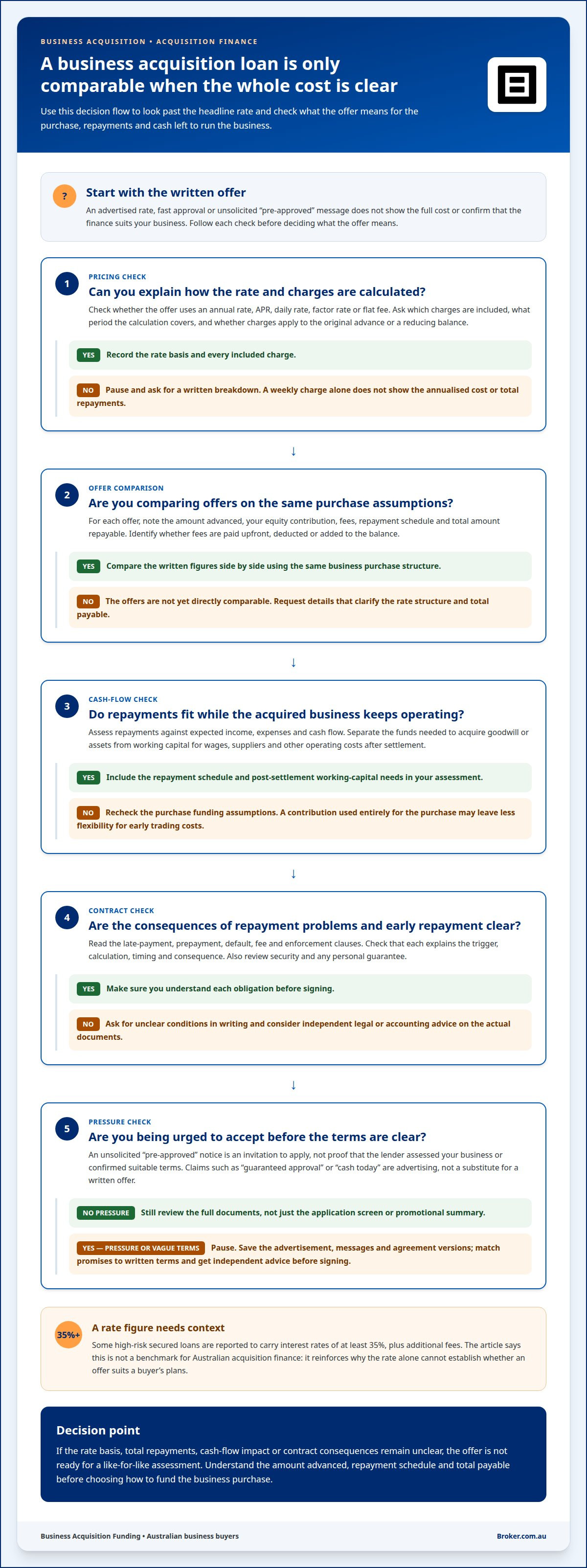
A headline rate can obscure the full cost of acquisition finance. If you’re buying a business, assess the rate alongside fees, repayment timing and your equity contribution. The loan amount affects repayments, while your contribution determines how much finance you need. Compare written offers using the same purchase assumptions, rather than relying on an advertised percentage alone.
APR can express borrowing costs as an annual rate, but ask which charges the calculation includes. Some offers use a daily rate, factor rate or flat fee instead. These figures aren’t directly comparable unless you understand the calculation period and whether charges apply to the original advance or a reducing balance. A weekly charge alone, for example, doesn’t show the annualised cost or total repayments.
For a business purchase, separate the funding needed to acquire the business from the cash needed to operate after settlement. You may need finance for goodwill or assets while retaining working capital for wages, suppliers and other operating costs. If your entire contribution goes towards the purchase, you may have less flexibility to manage early trading costs. Include both needs in your funding assessment.
Some high-risk secured loans are reported to carry interest rates of at least 35%, plus additional fees. This figure isn’t a benchmark for Australian acquisition finance. It underlines why the interest rate alone can’t establish whether an offer suits a buyer’s plans. Assess the loan against the acquired business’s income, expenses and expected cash flow, including how repayments fit alongside its ongoing working-capital needs.
For each offer, prepare a side-by-side comparison based on the same purchase structure:
- Record the interest rate and whether it’s annual, monthly, weekly or daily.
- Identify fees and whether they’re paid upfront, deducted or added to the balance.
- Note the repayments across the term and the total amount repayable.
- Model repayments against projected business cash flow after the buyer’s equity contribution.
Then test the assumptions. If one offer funds more of the purchase, consider how that affects repayments and the cash left for operations. If one lender quotes a factor rate and another an annual interest rate, ask for a written breakdown that makes the structures comparable. Before choosing how to fund the acquisition, understand the amount advanced, repayment schedule and total payable.
2. Unsolicited pre-approval notices and flashy loan advertisements
If you suspect a predatory business loan in Australia, pause before signing and keep the advertisement, offer and lender communications. Seek independent legal or accounting advice, then raise your concerns with the lender in writing and retain its response.
An unsolicited “pre-approved” message is an invitation to apply, not proof that a lender has assessed your business or confirmed suitable terms. Treat claims such as “guaranteed approval” or “cash today” as advertising, not a substitute for a written offer. The lender still needs to explain the obligations attached to the loan.
Fast processing can be useful, but speed alone doesn’t show whether an offer is suitable. Some borrowers may complete a predatory lender’s application in as little as 30 minutes before receiving funds. That pace leaves little room to read the contract carefully. Slow down if an advertisement pushes urgency, while the terms remain vague or unexplained.
Before accepting an offer, review the full documents, not just the application screen or promotional summary. Check the fine print for fees, repayment timing, security, personal guarantees and what happens if you miss payments. A “quick top-up”, for example, may require a new agreement or change how an existing balance is repaid. Ask for any unclear condition in writing.
Refinancing or rolling over a loan can ease an immediate cash-flow squeeze, but it may also extend the debt or add costs. Compare the new agreement with the current one: identify the balance being refinanced, any fees, and how the new repayment schedule affects cash flow. Don’t assume a lower regular payment means a lower total cost.
Independent advice is especially useful when an offer involves business assets, a personal guarantee or a proposed rollover. An accountant can help assess how repayments affect cash flow, and a lawyer can explain contractual obligations. Their review should focus on the actual documents and your business circumstances, not the lender’s headline claims.
If a lender targets your business with repeated calls or messages, keep a dated contact record and save each version of the offer. A simple review sequence can help expose pressure tactics:
- Save the advertisement, messages and all versions of the agreement.
- Match every promised feature to a written contract term.
- Ask for unclear fees, rollover conditions or repayment changes in writing.
- Obtain independent advice before signing or agreeing to replace a loan.
For a proposed purchase, assess the offer against the business’s expected income and acquisition costs, not just the speed of approval. Comparing the structure with business finance options can help clarify what the offer is designed to fund and how repayments may fit the plan.
3. Unclear late-payment, prepayment and default terms
Check the contract’s late-payment, early-repayment, default, fee and enforcement clauses. Each should explain the trigger, calculation, timing and consequence in plain language.
A late-payment clause should state when a payment counts as overdue and what happens next. Check whether the lender charges a fee, changes the repayment schedule or applies additional interest. The agreement should explain how any amount is calculated and when it becomes payable. “Administration costs may apply”, for example, doesn’t tell you the amount or circumstances. Ask for a specific calculation and written explanation before signing.
Review the payment method and due-date wording alongside the late-payment clause. A contract might define payment as received only after funds clear, rather than when a transfer is made. That difference could matter if a scheduled payment falls near a weekend or public holiday. Check the instructions for failed direct debits, missed instalments and lender notification. Clear steps help you plan cash flow and respond promptly.
For early repayment, find out whether you can repay part or all of the balance ahead of schedule. Look for an early-exit charge, minimum interest period or adjustment to the amount payable. The clause should explain how the lender calculates any cost and whether it changes over time. A vague reference to “break costs” leaves a key part of the decision unresolved. Request a worked example based on the agreement’s repayment structure.
The default clause should define the events that count as default, rather than relying on a broad label. Check whether missed payments are the only trigger or whether other events apply. Read the notice process, any time allowed to fix a breach, and the lender’s stated rights if the default continues. Serious consequences buried in dense wording or left unexplained are important warning signs.
Read these clauses together, not as isolated sections. A missed payment could trigger a fee, default interest and further action under separate parts of the same contract. Build a simple review table for each clause:
- Trigger: What event activates the clause?
- Cost: How is any charge or interest calculated?
- Timing: When does it apply, and when is payment due?
- Consequence: What can the lender do next?
Keep the signed agreement, repayment schedule and lender explanations together. If an answer changes between a phone conversation and the written terms, seek clarification against the document’s wording. For acquisition finance, model repayments against expected business cash flow, including periods when income arrives later than planned. A clear contract helps you identify obligations before a timing gap becomes a missed payment.
4. Warning signs in short-term business loan offers
An approval promise within 24 hours can sound helpful when you’re arranging funding to buy an existing business. Speed alone doesn’t prove a loan is predatory, but pressure to sign before reading the agreement is a clear reason to pause. Before accepting acquisition finance, take time to understand the loan terms and how repayments fit the business’s cash flow after settlement.
Compare the promised approval time with the details in the offer. Does it identify the lender, acquisition purpose, repayment structure and consequences of missed payments? If an advertisement promises fast funding but offers no clear route to written terms, don’t treat its headline as a complete offer. The lender should explain the agreement in plain English and give you time to understand it.
Urgency can get in the way of a useful credit assessment. A business buyer facing a settlement deadline, for example, may focus on receiving funds today and overlook repayments that fall due before the acquired business generates enough cash. Assess the proposed repayments against expected post-settlement income and operating costs, as well as your contribution to the purchase. If the schedule leaves the business short, fast approval won’t solve the underlying cash-flow problem.
Australian consumer-credit protections require careful consideration, not assumptions. The National Consumer Credit Protection Act 2009 is an Australian law, according to the Federal Register of Legislation. Its name alone doesn’t determine whether a particular business-purpose loan is covered; the loan’s purpose and structure matter.
Don’t assume responsible lending rules apply to every business-purpose loan. Consumer credit and business-purpose finance can be treated differently, so the purpose recorded in the agreement matters. If the document describes a business loan but the funds will support personal or household needs, seek independent legal advice before signing.
To assess a lender or broker for a business acquisition, record its legal business name and Australian business number, then compare those details with its agreement and communications. Check relevant public business and financial-services registers, review the stated complaints process, and search for documented decisions by named regulators. A polished website or confident sales call isn’t proof of credentials. Ask for written answers about the lender, broker’s role and complaints pathway.
These steps can help identify warning signs when seeking a short-term loan to purchase an existing business:
- Keep the advertisement, application, agreement and lender messages together.
- Read the full contract before signing, including default and repayment clauses.
- Write down unanswered questions and request clear written explanations.
- Get independent legal or accounting advice if terms remain unclear.
- Keep a dated record of pressure, changed terms or promised approval times.
Don’t let a deadline replace a cash-flow assessment. A short-term acquisition loan can address a defined, temporary funding gap when purchasing a business, but repayments must still fit the acquired business’s trading cycle and post-settlement cash flow. Compare the loan’s term and repayment schedule with your available contribution and expected cash flow. If a lender pressures you to sign before reviewing the documents, step back and assess the terms before accepting the credit.
5. What are typical interest rates, fees and total borrowing costs for Australian business loans?
There isn’t one rate or fee for every Australian business acquisition loan. Total cost depends on the funding structure, security, loan term and buyer’s financial position. When purchasing a business, first separate the amount needed to complete the transaction from the funds required to keep it operating. That distinction shows what the finance must cover and how much equity the buyer can contribute.
A lender assessing acquisition finance considers the transaction and the borrower’s capacity to make repayments. The purchase price, business financial records, buyer’s contribution and expected cash flow all help explain the funding request. Prepare a clear breakdown of the purchase, including the assets or goodwill being acquired, alongside forecasts of income and operating expenses. This gives the lender a fuller picture than the loan amount alone.
Compare written proposals by recording the interest rate, fees, repayment structure and total amount repayable. Also note how much of the purchase each proposal funds and what equity the buyer must contribute. A lower rate may not be the best fit if repayments leave too little cash for wages, suppliers or other costs after settlement. Assess the overall structure against the business’s projected trading cycle.
Read each lender’s conditions for fees and security as part of the proposed funding structure. Note whether a charge is due upfront, deducted from the advance or included in repayments. Identify any requested security and how the loan term affects repayments. These details help a business buyer understand the full commitment instead of focusing on one rate in isolation.
Use a comparison table to keep each acquisition proposal aligned:
- Purchase funding: Record the amount proposed for the transaction and the buyer’s equity contribution.
- Lender assessment: Note the financial records, forecasts and other information requested.
- Repayments: Map the schedule against the acquired business’s expected cash flow.
- Total cost: Include interest and all applicable charges across the loan term.
Before selecting a structure, stress-test the forecast against a slower trading period or delayed customer payments. The key question is whether the business can meet repayments while continuing to fund ordinary operations. Acquisition finance should support the purchase without overlooking the working capital needed after settlement. To discuss finance for a business purchase, explore suitable business finance options.
Broker.com.au
Broker.com.au can help you assess business finance options when loan costs or terms are difficult to compare. Discuss how a proposed facility fits your funding needs, repayment capacity and business cash flow, so you can consider the full commitment before proceeding.
If you’re buying a business, Business Acquisition Funding may be relevant. For other needs, options include secured or unsecured business loans and working capital finance. The right structure depends on the purpose of the funds and your business’s ability to make repayments.
Bring the written offer and your questions to the conversation, particularly if fees, default terms or repayment timing remain unclear. For a low-pressure discussion about your options, contact Broker.com.au.
Make your next borrowing decision with confidence
Before pursuing finance, turn your business plan into a clear decision framework. Identify what the funds need to achieve, how repayments fit expected cash flow, and what changes if income arrives later than planned. If you’re buying a business, weigh acquisition finance against both the purchase and the business’s ongoing needs. Knowing how to spot predatory business loans helps keep your assessment grounded in written terms, not sales pressure.
Broker.com.au can help you consider funding pathways suited to your needs, including Secured Business Loans, Unsecured Business Loans and Business Acquisition Funding. A focused conversation can connect your borrowing purpose with an appropriate finance structure, whether you’re purchasing an existing business or funding another business need.
Take the next step at your pace. Contact Broker.com.au about your loan to discuss your options and move forward with greater clarity.
Frequently Asked Questions
What are the warning signs of predatory lending?
Warning signs include pressure to accept an offer immediately, promises of guaranteed approval, unexplained charges and terms that change between a conversation and the contract. Be cautious if a lender won’t provide complete documents or explain who receives your repayments. If a verbal promise of flexible repayments doesn’t appear in the agreement, for example, don’t rely on it. Keep written records and assess the actual obligations before committing.
Who is at risk?
Any business can make a poor lending decision, but urgent cash needs can make an offer harder to assess. A business with uneven income may be vulnerable if repayments fall due before customers pay invoices. A buyer working to a purchase deadline may also feel pressure to accept finance before reviewing its effect on post-purchase cash flow. Risk arises when loan obligations don’t match the business’s capacity to meet them.
What are common warning signs of predatory business loans in Australia?
A practical way to learn how to spot predatory business loans in Australia is to check whether the lender’s identity, written offer and payment instructions align. Look for inconsistent business names, unexplained changes to account details, verbal promises missing from the contract, or requests to transfer money before receiving clear documents. These signs don’t establish misconduct by themselves, but they warrant a pause and independent verification before proceeding.
How can I compare a business loan’s APR, comparison rate and repayment schedule?
Compare the same borrowing amount and term across each offer, then record the quoted rate, fees, payment frequency and total repayable. Don’t assume an APR and comparison rate include the same charges; ask for a written breakdown of what each figure covers. Then map each repayment date against expected cash receipts. Monthly repayments, for example, may not suit a business whose customers pay on irregular cycles.
How can I spot misleading claims, high-pressure sales tactics or loan scams?
Be wary of messages promising guaranteed funds while withholding the lender’s legal name or full agreement. Don’t use payment instructions or contact details supplied only in an unexpected message; locate the organisation’s established contact channel independently. Treat countdowns, repeated calls and demands for sensitive login details as reasons to stop. Save the message and offer, and compare every promotional promise with the signed documents before sharing business information.
What are the risks of personal guarantees, asset security and default clauses?
A personal guarantee may make a business owner personally responsible for obligations if the borrower doesn’t repay, while asset security may put the named collateral at risk. Default clauses explain what a lender may do after a breach, including consequences beyond a missed instalment. Before signing, identify each guarantor, secured asset and default trigger. For a business acquisition, consider whether the business can make repayments during a slower trading period.
What Australian laws and regulations protect small businesses from unfair lending?
The National Consumer Credit Protection Act 2009 is an Australian consumer-credit law. ASIC has also flagged predatory SME lending as a regulatory priority for 2024-25.