
For an Australian business buyer, acquisition finance needs to fund the purchase without draining the cash needed to keep the business operating. Knowing how to negotiate better business loan terms means looking beyond the rate to the loan structure, fees and repayments that shape your finances after settlement.
Buying an existing business brings two demands together: completing the acquisition and keeping the business operating. A loan that looks affordable at settlement can put pressure on cash flow later if repayments or conditions do not suit the business’s income cycle.
This guide explains how to prepare financial information, compare acquisition loan terms and negotiate repayments and fees to suit your business. You’ll also learn how to assess loan structures and security before committing to finance for a purchase.
Key Takeaways
- Build your negotiating case with organised financial statements, clear loan purpose and realistic cash-flow projections.
- Compare the full loan offer, including fees, security, guarantees and early repayment conditions, rather than focusing only on the interest rate.
- Match repayment frequency and loan term to when revenue comes in, while weighing manageable repayments against the total interest cost.
- When buying a business, assess how the acquisition finance will cover the purchase and leave enough room for ongoing business cash flow.
- Understand the differences between term loans, lines of credit and other commercial finance options before choosing a structure.
Table of Contents
- Negotiating interest rates and loan terms
- Matching repayment schedules to business cash flow
- Preparing financial statements and cash-flow projections
- What other fees might I be charged?
- Understanding commercial loan types and terms
- Broker.com.au
Negotiating interest rates and loan terms
For a business buyer, acquisition finance needs to support the purchase while leaving the business able to meet its ongoing commitments. Knowing how to negotiate better business loan terms means connecting the lender’s offer to the purchase plan, your contribution and the acquired business’s ability to service debt.
- Assess the lender’s view of acquisition riskPresent the acquisition as a clear case for funding and repayment. Lenders assess your credit history, existing debts and repayment record, as well as the target business’s income and proposed purchase structure. Explain how the business will generate cash to meet repayments after settlement, including any planned operational changes. Also understand how your contribution and available security affect the lender’s assessment.Make sure the funding request matches the purchase purpose. A gap between the proposed loan, purchase costs and available equity can raise questions about whether the acquisition is financially workable.
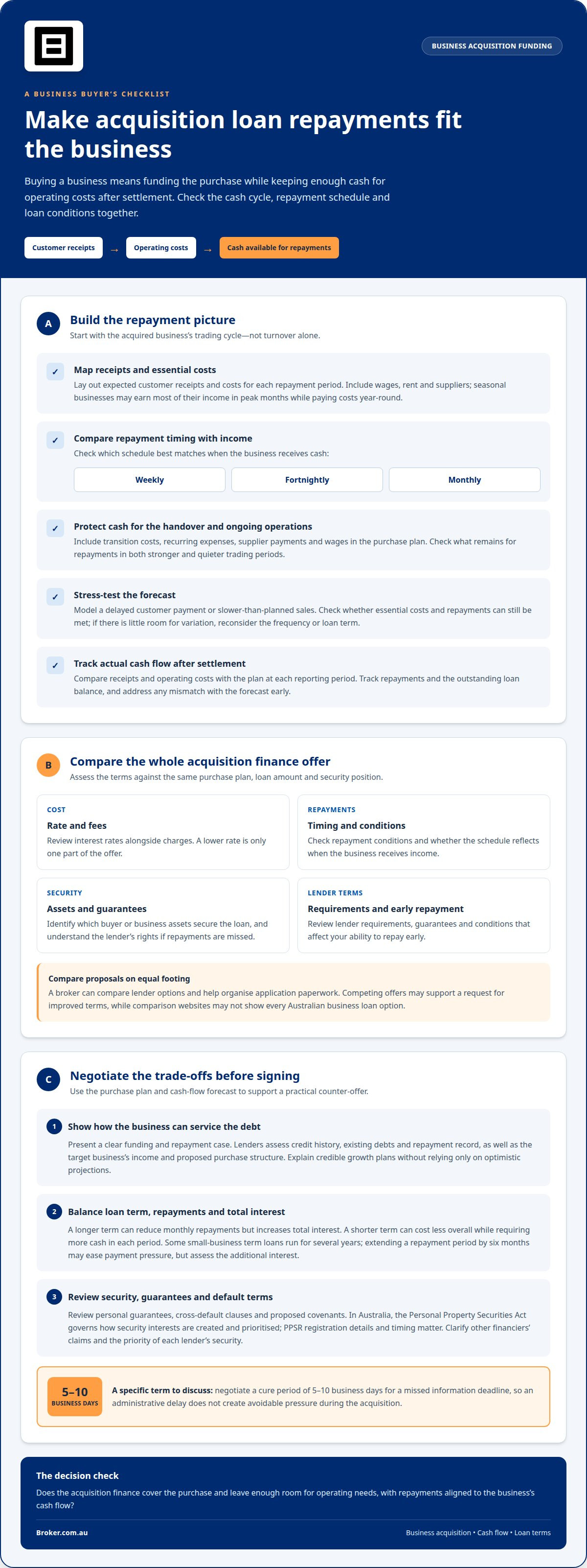
- Compare broker and lender offersCompare acquisition finance proposals using the same purchase assumptions, loan amount and security position. Review interest rates alongside fees, repayment conditions, guarantees and lender requirements. A broker can compare lender options and help organise application paperwork. Competing offers may also support a request for improved terms from an existing lender. Comparison websites may not show every Australian business loan option.Use offers as evidence, not just as a reason to ask for a lower rate. Check whether a proposal genuinely supports the acquisition and leaves enough cash for operating needs after completion.
- Negotiate rates, fees and repaymentsTo negotiate better business loan terms, build a counter-offer around the acquisition’s repayment case. Show how the target business’s revenue can support repayments, and explain credible growth plans without relying on optimistic projections alone. Ask the lender to review the interest rate and charges against comparable offers, then request repayment timing that reflects when the business receives income.Compare any revised proposal with the purchase timeline and cash needs after settlement. A lower rate matters, but so do conditions that affect working capital or your ability to repay early.
- Discuss guarantees and security arrangementsIdentify which buyer or business assets will secure the acquisition loan, and understand the lender’s rights if repayments are missed. In Australia, the Personal Property Securities Act governs how security interests are created and prioritised. PPSR registration details and timing matter to both borrowers and lenders. If other financiers have claims over assets, clarify intercreditor arrangements and the priority of each lender’s security.Review personal guarantees, cross-default clauses and proposed covenants before signing. Negotiate narrow default triggers and a cure period of 5-10 business days for a missed information deadline, so an administrative delay doesn’t create avoidable pressure during the acquisition.
Matching repayment schedules to business cash flow
For a business buyer, acquisition loan repayments need to fit the acquired business’s trading cycle after settlement. Set a schedule that accounts for operating costs and the cash needed to keep the business running, not just the purchase itself.
- Map the acquired business’s cash cycle. Lay out expected customer receipts and essential costs for each repayment period. A seasonal business may collect most of its income during peak months but still pay wages, rent and suppliers year-round. Identify when cash is available for debt servicing, then compare that timing with weekly, fortnightly and monthly repayment options before choosing a schedule.
- Protect operating funds after settlement. Build the acquisition cash-flow plan around the handover as well as ordinary trading. Include recurring expenses, supplier payments, wages and any transition costs in the purchase plan. Then assess what remains for loan payments during both stronger and quieter trading periods. This helps avoid using cash the business needs to fulfil orders or maintain day-to-day operations.
- Stress-test acquisition loan repayments. Compare projected repayments with the acquired business’s expected income after operating costs. Model a delayed customer payment or a slower-than-planned sales period, then check whether the business can still meet essential costs and repayments. If the forecast leaves little room for variation, consider whether the repayment frequency or loan term needs to change. Base your decision on cash available for servicing, not turnover alone.
- Balance the loan term against total interest. Some small-business term loans run for several years. A longer term can reduce monthly repayments but increases total interest; a shorter term can cost less overall while requiring more cash in each period. Compare both outcomes with the acquired business’s forecast cash flow. Extending a repayment period by six months may ease payment pressure, but assess the additional interest before accepting that trade-off.
- Track the repayment profile after acquisition. Once the purchase is complete, compare actual receipts and operating costs with the cash-flow plan at each reporting period. Track payments alongside the outstanding loan balance, and note when seasonal changes could tighten available cash. If the business’s revenue cycle differs from the forecast, address the mismatch early. A finance structure aligned with business cash flow can help frame the conversation around acquisition servicing and operating needs.
Preparing financial statements and cash-flow projections
Prepare organised financial records and a clear business plan before negotiating finance. Refinancing or changing loan terms can involve setup costs, ongoing fees or an exit fee, so compare these with potential interest savings before proceeding.
- Assemble financial statements lenders can assess. Bring together your balance sheet, income statement and cash flow statement, using consistent reporting periods. The balance sheet shows assets, liabilities and equity; the income statement records revenue and expenses; the cash flow statement tracks cash movements. Reconcile the figures so a lender can see how trading results connect with available cash and outstanding debts.
- Explain movements behind the numbers. Identify changes in revenue, expenses, debt or cash flow that could affect your ability to service finance. For example, distinguish a one-off expense from a recurring cost, and explain a period of lower revenue using the available trading information. Put the context alongside the figures rather than expecting a lender to infer why results changed.
- Build projections from stated assumptions. Set out expected income, operating costs, existing debt commitments and proposed repayments. Show how the figures respond to changes such as slower customer payments or reduced sales. For a business acquisition, include the expected trading position after purchase and the cash needed for ongoing operations. Explain your revenue and expense assumptions so the projected cash flow presents a reasoned case, not an unsupported forecast.
- Use your business plan to connect finance with purpose. Describe the business’s goals, market analysis and financial projections, then explain how the requested loan supports those goals. If you’re buying an existing business, outline the purpose of the acquisition and how the business will generate cash for repayments. Keep the plan consistent with your financial statements. Conflicting sales estimates or cost assumptions can make the proposal harder to assess.
- Read prepayment and payout clauses before refinancing. Check whether early repayment attracts a penalty or exit fee, and ask how the lender calculates the payout amount. Compare that cost with interest savings, new setup costs and ongoing fees under the replacement loan. A longer loan term may lower repayments while increasing total interest. Changing terms can also alter security or other obligations, so compare the complete agreements, not just the new rate.
What other fees might I be charged?
Compare offers using the interest rate, fees and total repayment cost for the same loan amount and term. Ask the lender to explain each charge, then negotiate setup, ongoing, processing, late-payment, prepayment and exit fees before accepting the offer.
- Check setup, ongoing and exit feesList every one-off and recurring charge in the loan offer, including application or setup costs, monthly account fees and exit fees. Check when each fee applies and whether it changes if you repay early or refinance. If you’re replacing an existing loan, compare its exit fee and ongoing charges with the new loan’s setup costs. Ask the lender to reduce or remove charges that affect your plans.
- Compare fees and total loan costCompare offers with the same loan amount, repayment frequency and loan term. Add up the interest and fees payable over that period instead of judging offers by the headline rate alone. A lower rate may not mean a lower total cost if setup, monthly or exit charges are higher. Use the repayment schedule and fee breakdown to see when costs are due and how they affect cash flow.As payments begin, compare the lender’s statements with the agreement. This helps you identify whether monthly account charges and other listed fees match the terms you accepted.
- Negotiate processing fees and penalties. Ask the lender to reduce origination or processing fees, and clarify whether they’re charged upfront or added to the loan balance. Review late-payment fees and prepayment penalties alongside the repayment conditions. If you plan to repay early, request a reduction or removal of the prepayment fee. Compare any revised offer with the original, including total charges and the repayment schedule.For a business buyer, include these charges in the acquisition finance budget. Fees paid at settlement reduce the funds available for stock, wages or other early operating costs after the purchase.
- Review collateral and personal guarantees. Identify which assets secure the loan and what the lender can do if repayments aren’t made. Offering equipment or a commercial vehicle as collateral can affect the interest rate or approval prospects, but the lender may repossess pledged assets after default. Ask whether a personal guarantee applies, who must provide it and what obligations it creates. Don’t treat a guarantee as a routine formality.Use income statements and cash-flow projections to assess whether repayments remain manageable without relying on selling secured assets. Before signing, compare the written security conditions with the assets you intended to offer, and clarify any mismatch with the lender.
Understanding commercial loan types and terms
Choose a funding structure that matches the purpose, repayment pattern and available security. In Australia, secured loans use pledged assets, while unsecured loans do not rely on specified collateral. Lenders still assess repayment capacity and may require a personal guarantee.
- Match the loan structure to the funding need. A term loan provides a lump sum repaid over an agreed period, making it suitable for a defined purchase or investment. A line of credit lets a business draw funds up to a limit and pay interest on the amount used. When buying a business, assess whether acquisition finance covers the purchase while preserving working capital.
- Compare secured and unsecured offers by risk and obligations. With a secured loan, the lender may take specified assets as collateral and repossess them if the borrower defaults. An unsecured loan doesn’t pledge particular assets, but the lender still assesses income, debts and credit history. Compare interest, fees, repayment terms and any personal guarantee rather than assuming either structure is automatically cheaper.
- Understand the terms used in the application. Loan-to-value ratio compares the loan with the value of the asset offered as security. A balloon payment is a larger amount due at the end of the loan. A personal guarantee can make an individual responsible for business borrowing. Ask how each term affects your obligations, payments and available capital before accepting the contract.
- Choose specialist finance for a specific asset or cash-flow need. Equipment finance funds equipment purchases, with the equipment often acting as collateral. Invoice finance lets a business borrow against accounts receivable to access cash. For example, a business facing delayed invoice payments may compare invoice finance with a term loan, which provides a fixed lump sum rather than borrowing against receivables.
- Compare lender assessment and full contract conditions. Australian non-bank lenders may use more flexible assessment criteria than banks, but rates and fees vary. Compare offers for the same borrowing purpose, then review conditions on repayments, security, fees and default. Pre-approval isn’t final, so review the final contract and propose changes before signing if a term doesn’t fit your business needs.
- Assess acquisition finance as part of the purchase plan. When purchasing an existing business, consider how the loan structure supports the transaction and ongoing cash flow. Review the deposit or equity contribution, servicing capacity and any security offered alongside the purchase funding. To explore business acquisition finance options, compare structures against the purchase purpose and the capital the business needs after settlement.
Broker.com.au
Broker.com.au can help you compare business loan options and assess how rates, fees, repayments and security fit your circumstances. This can be useful when an existing offer doesn’t suit your cash flow or when buying a business means balancing acquisition funding with ongoing working capital needs.
Its business finance options include Business Acquisition Funding, Secured Business Loans, Unsecured Business Loans and Working Capital Finance. The right structure depends on the loan purpose, available security, financial position and ability to service repayments. Considering these factors together helps you assess the trade-offs instead of focusing on the interest rate alone.
Contact Broker.com.au to discuss your business finance needs and the loan terms you want to negotiate.
Take your next finance decision forward
For a business buyer, the next step is to connect the funding decision with the business you want to build. If you’re purchasing an existing business, consider how acquisition finance can support the transaction while leaving the new operation room to trade and grow. A considered approach to how to negotiate better business loan terms can help you explain your priorities clearly in a lender conversation.
Broker.com.au offers Secured Business Loans, Business Acquisition Funding and Unsecured Business Loans. These options address different funding needs depending on the purchase, available security and business circumstances. A discussion can focus on the structure that aligns with your plans, rather than treating the loan rate as the only decision.
Contact Broker.com.au to discuss your loan and the terms that matter to your business. A clear next step can make a complex finance decision feel more manageable, so move forward with confidence.
Frequently Asked Questions
Security, Guarantees And The PPSR: How Is The Loan Protected?
A lender may protect a business loan through collateral, a personal guarantee or both. If the borrower defaults, the lender may have rights over pledged assets. In Australia, the Personal Property Securities Act governs how security interests are created and prioritised; PPSR registrations record security interests in personal property. Before signing, identify which assets and guarantors are covered, and check the agreement’s default provisions and registration details.
What Are “Loan Terms” And Why Do They Matter?
Loan terms are the contractual conditions that set out how borrowing works, including the amount, interest rate, repayment obligations, fees, security and default conditions. They matter because two offers with similar rates can create different obligations. For example, a balloon payment, early repayment charge or personal guarantee can affect your business in different ways. Read the full agreement and clarify any terms you don’t understand before accepting the offer.
What business loan terms can Australian businesses negotiate?
Australian businesses can negotiate the interest rate, repayment frequency, loan term, establishment and ongoing fees, prepayment conditions, collateral and personal guarantees. They can also discuss restrictive covenants and default triggers. Prioritise the terms that matter most to your situation. A seasonal business might focus on repayment timing, while a business planning an early payout may prioritise prepayment conditions.
What financial documents should you prepare before negotiating a business loan?
Prepare current balance sheets, income statements and cash-flow statements, along with a business plan covering goals, market analysis and financial projections. Clearly explain existing debts and any significant changes in revenue or expenses. For an acquisition, add purchase assumptions and projected trading figures after completion. Consistent reporting periods and reconciled figures help a lender assess business performance and proposed repayment capacity.
How can you negotiate a lower interest rate or establishment fee on a business loan?
Build a specific counter-offer using comparable loan proposals, evidence of revenue growth, a strong repayment record and an accurate credit profile. Ask the lender to match or improve a competing offer, and specify the rate or establishment fee you want reviewed. Compare like-for-like loan amounts, terms and security conditions. If the lender won’t adjust the rate, negotiate another cost or condition to improve the overall value.
How do loan term, repayment frequency and balloon payments affect business loan costs?
A longer loan term generally reduces each repayment but increases total interest. More frequent repayments change when cash leaves the business, so align payment dates with revenue collection. A balloon payment lowers regular instalments by leaving a larger balance due at the end. Before accepting one, plan how you’ll pay the final amount and compare the total cost with a structure that repays more steadily.
Can Australian businesses negotiate loan covenants, collateral or personal guarantees?
Yes. A business can propose narrower covenants, more specific default triggers, alternative collateral or limits on a personal guarantee. For example, a manufacturer seeking equipment finance could explain how the asset supports operations and provide financial evidence when negotiating restrictive conditions. Review existing lender security and intercreditor arrangements too, as another lender’s rights can affect which assets are available as collateral.