
Could the business you already help run support its own change of ownership? For management teams considering a buyout, management buyout financing australia can feel complex, especially when the deposit, personal equity and seller funding all need to fit together. Start by working out what the business can realistically repay after settlement, then shape the funding plan around that figure rather than the purchase price alone.
You may know the company well, but lenders will still want evidence of reliable cash flow, relevant management experience and a practical transition plan. This guide explains how Business Acquisition Funding can combine acquisition debt, management equity and vendor finance, and what may affect the structure. It also covers lender assessments, preparing financial information and building a credible acquisition finance proposal. Broker.com.au arranges acquisition funding and helps organise application information, bringing clarity to the process of buying a business.
Key Takeaways
- Management buyout financing australia works best when the funding plan reflects the ownership change, purchase structure and transition.
- Compare senior debt, management equity, private capital and seller finance as possible components. Their suitability depends on the transaction and lender assessment.
- Test whether sustainable cash flow can support proposed repayments, using forecasts built on clear, supportable assumptions.
- Prepare in stages: define the deal, organise financial and transaction information, then present a funding proposal for formal assessment.
- Broker.com.au can help structure Business Acquisition Funding around the transaction and facilitate lender access as a broker, not a direct lender.
Table of Contents
- Management buyout financing in Australia: what the transaction involves
- Management buyout funding options: combining debt, equity and seller support
- What lenders assess for management buyout finance
- Preparing to apply for Australian management buyout finance
- Structure your management buyout funding with Broker.com.au
Management buyout financing in Australia: what the transaction involves
A management buyout (MBO) is a change of ownership in which existing managers acquire all or part of the business they help run. Knowing the operation from the inside can help the team explain its customers, systems and trading patterns, but it doesn’t make the purchase funding automatic. The buyers still need to show how the transaction will be funded and how the business can manage any new debt after settlement.
“A management buyout is a purchase of a business, or an agreed interest in it, by managers already working within that business.” Unlike an external acquisition, an MBO brings the incoming owners and outgoing owner together with the target business and potential funders. Managers set out their offer and contribution, the current owner agrees the sale terms, and funders assess the proposed acquisition and repayment capacity. The Management Buyout (MBO) overview also describes common financing approaches, including debt and seller financing.
How a management buyout differs from other business purchases
An MBO involves existing managers becoming buyers. A management buy-in (MBI), by contrast, involves incoming managers from outside the business acquiring it. That distinction can shape the proposal: MBO candidates can draw on direct knowledge of customers, systems and trading patterns, but still need to evidence their assumptions and show they are ready to take ownership.
The purchase may involve shares, business assets or another agreed interest. The structure determines what is changing hands and what the funding proposal needs to explain. For an asset purchase, identify the assets included. For a share purchase, describe the ownership interest being acquired. In either case, explain how the purchase price, management contribution and funding request fit together. Management buyout financing australia should be shaped around the actual transaction, not treated as a standard loan request.
Why the management team’s transition plan matters
Operational familiarity is an advantage, but it needs to translate into a credible ownership plan. Explain how key customers are served, which systems support day-to-day work and what drives earnings. Set out how responsibilities will be divided after settlement, including who will lead the business and how decisions will be made.
Identify any reliance on the outgoing owner. If that person manages important customer relationships, holds specialist knowledge or has key responsibilities, a sudden departure could disrupt continuity. Explain how those duties and relationships will be transferred, and identify where the team may need support during the handover. A clear plan helps potential funders understand how the business will operate through the change, but it doesn’t guarantee finance.
The funding case ultimately depends on the transaction structure, the management team’s contribution and evidence of the business’s performance. Link each part of the purchase plan to supporting information, so funders can see what is being acquired, who is financing it and how the business is expected to manage the transition.
Management buyout funding options: combining debt, equity and seller support
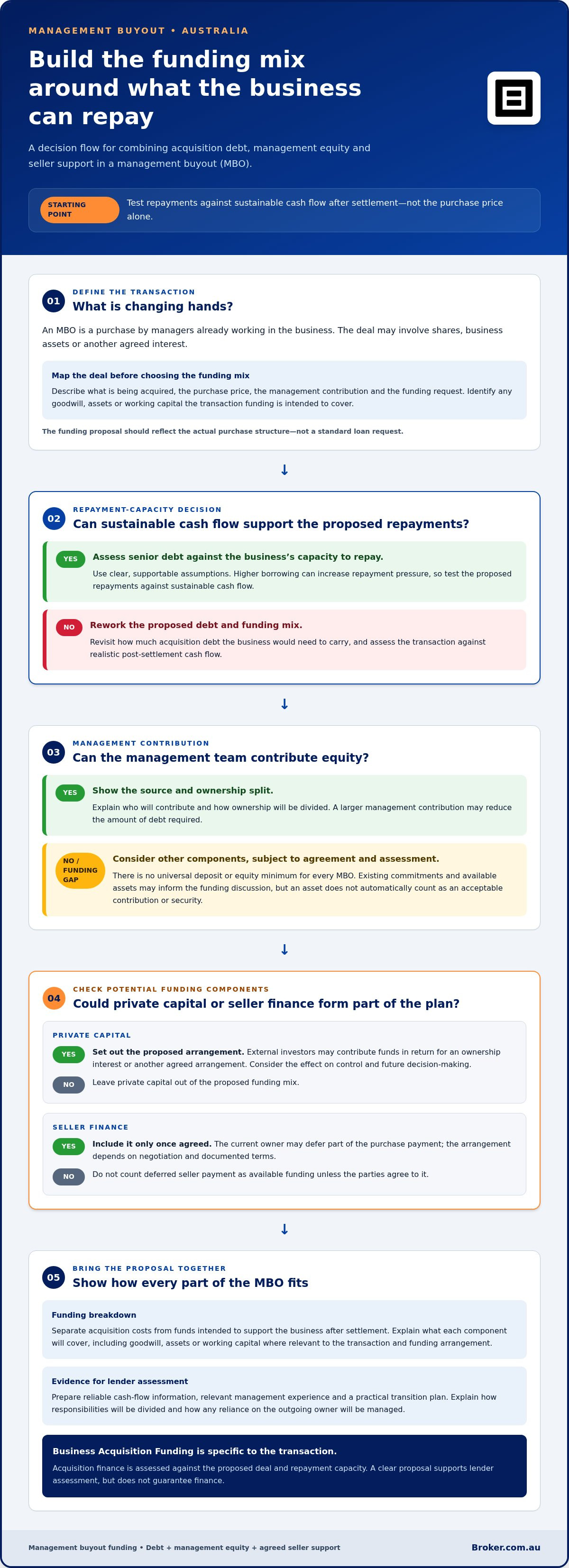
An MBO may use a blend of funding sources rather than a single loan. The right mix depends on the agreed purchase structure, how much the management team can contribute and whether the business can support repayments after settlement. There is no universal deposit or equity minimum for every transaction. Build the proposal around the particular deal and its evidence.
Potential funding components include:
- Senior debt: Acquisition borrowing assessed against the transaction and the business’s capacity to repay. Higher borrowing can increase repayment pressure, so test the proposed repayments against sustainable cash flow.
- Management equity: Funds contributed by the buyers or management team. A larger contribution may reduce the amount of debt required. Buyers should also account for existing commitments and available assets.
- Private capital: External investors may contribute funds in return for an ownership interest or another agreed arrangement. Consider how this could affect control and future decision-making.
- Seller finance: The current owner may agree to defer part of the purchase payment. This depends on negotiation and documented terms, so don’t include it as available funding until the parties agree.
Business Acquisition Funding may be structured to address goodwill, business assets and working capital where these form part of the transaction and the funding arrangement supports them. Set out what the purchase requires, and distinguish acquisition costs from funds intended to support the business after settlement. A clear breakdown helps potential funders understand what each component will cover.
How deposit and equity contributions shape an MBO
Management buyers might contribute personal funds, pooled team equity or funds arranged within the agreed ownership structure. The contribution affects the amount of acquisition debt required and how the proposal is presented. Explain where the funds will come from, who will contribute and how ownership will be divided. Existing financial commitments and available assets may also inform the funding discussion, but an asset does not automatically count as an acceptable contribution or security.
When debt, private capital or seller finance may be considered
Debt may suit a transaction where the business can demonstrate it can meet repayments. Private capital could help address a funding gap, but investors may expect a share of ownership or influence. Seller finance can reduce the amount payable upfront if the owner agrees to deferred payment terms. Compare each option by looking at repayment pressure, ownership implications and conditions together.
For example, a team with limited available equity might explore whether seller support or an investor could form part of the structure. It should also assess how either option could affect control and cash flow. These options aren’t guaranteed, and lender requirements vary by transaction. A broker can help organise the funding information and facilitate access to lenders. Explore tailored business acquisition funding to consider how the components may fit your MBO.
What lenders assess for management buyout finance
A lender’s central question is whether the proposed acquisition debt can be repaid without placing the business under undue strain. Servicing means meeting repayments from evidenced, sustainable cash flow, not relying on an optimistic forecast alone.
Repayment capacity depends on both the buyers’ evidence of capability and the business’s evidence of sustainable cash flow. This distinction matters in management buyout financing australia. A strong operating history can support the proposal, but the management team must also show it is ready to take ownership and manage the transition.
How cash flow and servicing inform the funding proposal
Historical accounts show how the business has performed, while forecasts set out what the buyers expect after settlement. Present them separately. If the team adjusts earnings to reflect the expected ownership structure, explain each adjustment and support it with evidence. Don’t present potential savings as certain before they are substantiated.
Repayment analysis also needs to account for working capital requirements and existing obligations. A business may report earnings but still need cash for stock, wages, supplier payments or seasonal trading patterns. Map these needs against expected repayments so the proposal doesn’t assume every dollar of earnings is available for debt service. Include transition assumptions too, such as when the outgoing owner will leave or when key responsibilities will change.
There isn’t one cash-flow ratio or servicing threshold that applies across all lenders. Assessment depends on the proposed structure and evidence. Use clear, supportable forecasts, explain the assumptions behind them and show how the business could respond if trading differs from expectations.
What the lender may need to understand about the business and buyers
Organise the information so a lender can connect the business’s performance to the proposed purchase and the management team’s ability to lead it. Depending on the transaction, lenders may request two to three years of financial statements, current trading information, a valuation and a business plan with cash-flow projections. Requirements vary, so keep source records and explanations together.
- Management capability: Summarise each buyer’s relevant industry and operational experience, proposed responsibilities and role after completion. Explain how the team will cover essential functions.
- Business position: Present historical results alongside current trading, existing debt and material risks that could affect earnings or cash flow. Explain unusual changes rather than leaving them unexplained.
- Transaction and contribution: Set out the purchase terms, the management team’s equity contribution and how the requested acquisition finance will be used. Check that the figures match across the proposal and supporting documents.
Consistency makes the case easier to assess. Forecasts should align with trading evidence, and the funding request should match the agreed transaction. This preparation won’t assure approval, but it gives lenders a clearer basis to consider the business, the buyers and the proposed repayments.
Preparing to apply for Australian management buyout finance
A funding proposal is easier to assess when the deal, management contribution and repayment case tell one consistent story. Start organising these before formal lender assessment. Early finance discussions can help you understand possible structures and refine negotiations, but they are preliminary, not approval. Progress transaction due diligence and independent advice alongside finance planning, so funding considerations inform the deal without replacing specialist advice on its terms.
A practical MBO checklist is the deal, buyer equity, evidenced cash flow and a capable management team, all presented consistently.
A practical sequence for business buyers
Work through the preparation in order. The aim is to turn an initial buyout idea into a coherent proposal and identify open questions before they delay more detailed discussions.
- Define the transaction. Clarify what is being acquired, who the buyers will be and whether the purchase involves shares, assets or another agreed interest. Record the current purchase terms and identify points still under negotiation.
- Assemble the evidence. Bring together the business’s financial information, current trading position, details of the management team’s equity contribution and a cash-flow forecast. Show how you developed the forecast assumptions, including expected working capital needs.
- Compare funding structures. Assess potential acquisition finance against the purchase terms, likely repayment capacity, management contribution and transition plan. Consider how changes to the proposed debt or seller support could affect the cash available to the business after settlement.
- Coordinate due diligence and finance discussions. Progress your review of the business while preparing the funding proposal with relevant advisers. Update both workstreams as new information emerges, so the terms and finance request remain aligned.
Common preparation gaps that can slow an MBO proposal
Small inconsistencies can create avoidable questions. Check that financial information reconciles across documents, explain changes in earnings and avoid forecasts built on unsupported growth or cost reductions. Be specific about working capital: unclear assumptions can hide how much cash the business needs to trade after completion and what may be available for repayments.
Resolve, or clearly flag, open questions about purchase terms, ownership arrangements and management responsibilities. If the proposal describes one ownership split but the transaction documents show another, the funding case becomes harder to follow. Keep one current record of the agreed terms and update supporting material when they change.
During funding discussions, a broker can help organise application information and facilitate lender access for Business Acquisition Funding. A formal lender assessment may require further information and does not guarantee approval. For management buyout financing australia, early preparation helps the team identify gaps and have focused funding conversations, without treating an initial indication as a final decision.
Broker.com.au arranges Business Acquisition Funding as a broker and funding facilitator, not a direct lender. Explore acquisition funding support to organise your proposal around the transaction, equity and cash-flow evidence.
Structure your management buyout funding with Broker.com.au
A credible MBO funding plan brings four elements together: the transaction structure, the management team’s equity contribution, evidence that the business can service repayments and a practical transition plan. Each affects the others. A change to the purchase terms can alter the amount of finance required, while a revised transition plan may change the assumptions behind projected cash flow. Review them as one proposal, not as separate decisions.
Broker.com.au arranges Business Acquisition Funding for Australian buyers and facilitates funding discussions with lenders. It doesn’t lend directly. The service helps connect the proposed deal with relevant finance discussions and organise the information needed for a loan application. Proprietary AI technology supports application preparation, but it doesn’t promise a particular timeframe, rate or approval outcome.
What a broker-led funding discussion can clarify
A focused discussion can help test whether the funding approach reflects what the management team intends to buy, how much equity it can contribute and what the business’s financial evidence shows. It can also identify information that needs clearer support, such as working capital assumptions or how earnings may change during the handover.
Broker.com.au helps organise transaction, financial and management information for the application and facilitate lender access. Potential lenders make their own assessments, and the available structure, terms and requirements depend on the individual transaction. For complex acquisition considerations, corporate advisory support may also be relevant alongside finance preparation.
Your next steps as an MBO business buyer
Before finalising a funding plan, bring together the essentials. A concise summary can make early conversations more productive and highlight what still needs work:
- Set out the proposed acquisition: Describe what is being purchased, who the buyers are, the proposed ownership arrangement and key transaction milestones.
- Outline the contribution and funding need: Show the management team’s expected equity contribution, the funding required and how it relates to the agreed purchase terms.
- Gather performance evidence: Organise historical accounts and current trading information, then list forecast assumptions that need further support.
- Map the transition: Identify management responsibilities after completion, any reliance on the outgoing owner and how key knowledge or relationships will be handed over.
This preparation gives you a clearer basis for discussing acquisition finance before the funding plan is locked in. It also helps keep the transaction, cash-flow case and management story aligned as negotiations progress. Management buyout financing australia can involve decisions beyond the loan itself, so consider how each proposed funding component affects repayments, ownership and the transition.
If you’re weighing up the next step, you can discuss your management buyout funding with Broker.com.au and explore an approach shaped around your proposed transaction.
Turn your buyout plan into a clear next step
Before moving forward, decide what would make the proposed buyout workable for your team: the ownership arrangement you’re aiming for, the contribution you can commit and the repayment assumptions you need to validate. These guideposts can help you assess changes to the deal while keeping the business’s ability to operate after settlement in view.
Management buyout financing australia is about matching the funding approach to the transaction and the buyers’ readiness to take ownership. You don’t need every detail settled before beginning a discussion, but having your key questions and current information in order can make that conversation more useful. Broker.com.au is an award-winning business loan broker that arranges specialist Business Acquisition Funding and facilitates applications with lenders.
Ready to explore funding options for your proposed buyout? Discuss management buyout funding with Broker.com.au and take a clear set of transaction, equity and cash-flow details into the conversation.
Frequently Asked Questions
Can a management buyout involve buying only part of an existing business?
Yes. Managers may acquire part of a business rather than the whole operation if the current owner agrees to the arrangement. Be precise about what the purchase covers and what rights or responsibilities come with the acquired interest. Clarify how decision-making, ongoing ownership and the division of business activities would work. These details help ensure the funding request reflects the actual deal, not an assumed full transfer.
Is a management buyout only available to senior managers?
No. A management buyout isn’t automatically limited to people with a particular job title. The key question is whether the proposed buyers are part of the existing management team and can credibly take responsibility for ownership. A team may include managers with different operational roles. Set out each buyer’s experience, contribution and intended responsibilities so the proposed ownership group’s capability is clear, even if not every participant holds a senior title.
Can management buyout finance include the value of goodwill?
Yes, management buyout finance may include goodwill where it forms part of the purchase and the proposed funding arrangement supports it. Goodwill relates to value beyond identifiable assets, so explain how it is reflected in the agreed purchase terms and valuation. Present management buyout financing Australia with a clear breakdown of what the funding will cover, rather than treating goodwill as a separate amount without context.
Do management buyout buyers have to provide a personal guarantee?
Not in every case. Whether a personal guarantee is required depends on the lender’s assessment and the transaction’s structure. A guarantee can have implications beyond the business, so understand who would give one, what obligations it creates and when it could apply before agreeing to finance documents. Don’t assume business assets alone will determine the security arrangement. The proposed buyers should review the terms with an appropriate independent adviser.
What happens if the business’s cash flow changes after finance approval?
A cash-flow change can affect the business’s ability to meet repayments, even if finance has already been approved. Review the loan documents to understand the agreed repayment obligations, then promptly discuss material changes with the lender or your broker. For instance, losing a major customer or facing an unexpected trading downturn may call for a revised cash-flow plan. Don’t assume repayment terms will change automatically or wait until a payment becomes difficult.
Should managers get independent advice before completing a buyout?
Yes. Independent advice can help management buyers understand the sale terms, ownership arrangements, funding commitments and potential risks before proceeding. The right advisers may include legal, accounting or tax professionals, depending on the transaction. This is especially useful where managers are both employees and prospective buyers, as their interests and responsibilities may change at completion. Keep advice independent of the funding discussion, and use it to make informed decisions about the proposed deal.