
What if the best way to fund a franchise purchase isn’t to start with your family home as security? If you’re searching for “funding to buy a franchise australia”, the key question is how the franchise, your equity contribution and your financial position fit a lender’s requirements. One lender’s initial hesitation doesn’t necessarily mean every lender will decline the application.
Requirements vary, and secured and unsecured options come with different trade-offs. A practical first step is to check which lenders may consider the franchise and what information they need to assess its performance and your ability to service the debt.
This guide explains Business Acquisition Funding for Australian franchise buyers, including equity considerations, cash flow and servicing checks, lender requirements, and the differences between secured and unsecured finance. You’ll also learn what can affect approval timeframes and how a broker can help you navigate a complex application. The goal is to understand your options before you commit.
Key Takeaways
- Compare secured and unsecured options for funding to buy a franchise australia, and weigh available property equity against the trade-offs of borrowing without property security.
- Consider how the franchise’s track record and your financial position may shape a lender’s assessment.
- Prepare the Franchise Agreement, Disclosure Document and lease early so key details are ready for lender review.
- Check that projected cash flow can support repayments, and consider whether equipment or vehicle needs call for separate finance.
- A broker can help you explore lenders and finance structures that may suit the franchise purchase.
Table of Contents
- Understanding the Franchise Lending Landscape in Australia
- Types of Funding to Buy a Franchise: Secured vs Unsecured
- What Lenders Actually Look for in a Franchise Application
- Step-by-Step Guide to Organising Your Franchise Finance
- Why Partnering with a Specialist Broker is Your Best Move
Understanding the Franchise Lending Landscape in Australia
Funding to buy a franchise in Australia is a form of Business Acquisition Funding. A lender may assess both your ability to repay and the business you plan to buy. Factors can include the franchise’s trading history, the franchisor’s support and the terms of the agreement.
An established franchise network may give a lender useful performance information, but it doesn’t guarantee approval or make a franchise purchase easier to finance than an independent business. Your application still needs to show that the purchase is viable, that cash flow can support repayments and that the deal meets the lender’s credit policy.
The Franchise Agreement is central to the purchase. It sets out your relationship with the franchisor, including your rights and obligations as an operator. Read it carefully and allow time for any required reviews or approvals when planning your finance timeline. For context on franchising and its Australian framework, see the Franchising page.
Why Lenders Prefer Franchises Over Start-ups
An established franchise may offer more information to assess than a completely new independent business. Performance information from other franchisees can provide a benchmark, but it doesn’t guarantee a new site will achieve similar results. Franchisor training and ongoing support may help you manage the transition, but lenders will still want to understand how the specific purchase can generate enough cash flow to service its debt.
Accredited Franchise Lists are used by some major banks to identify brands they’ve assessed under internal lending criteria. Inclusion may help a lender assess an application, but it doesn’t guarantee approval or the same terms for every franchisee. Lists and criteria vary between banks, so a brand that doesn’t fit one lender’s policy may still be considered by another.
The 2026 Outlook for Australian Franchise Finance
Interest rates affect borrowing power because they influence repayments and the cash flow available to meet them. Rates and lender criteria can change, so test proposed repayments against realistic franchise forecasts rather than relying on a headline rate. Banks and non-bank lenders may have different criteria and loan structures. Compare the full terms and costs of any offers you receive.
Franchise Tier is a lender’s internal classification of a franchise brand, which may reflect factors such as its track record, scale and perceived risk. The classification system can differ between lenders and credit teams.
Types of Funding to Buy a Franchise: Secured vs Unsecured
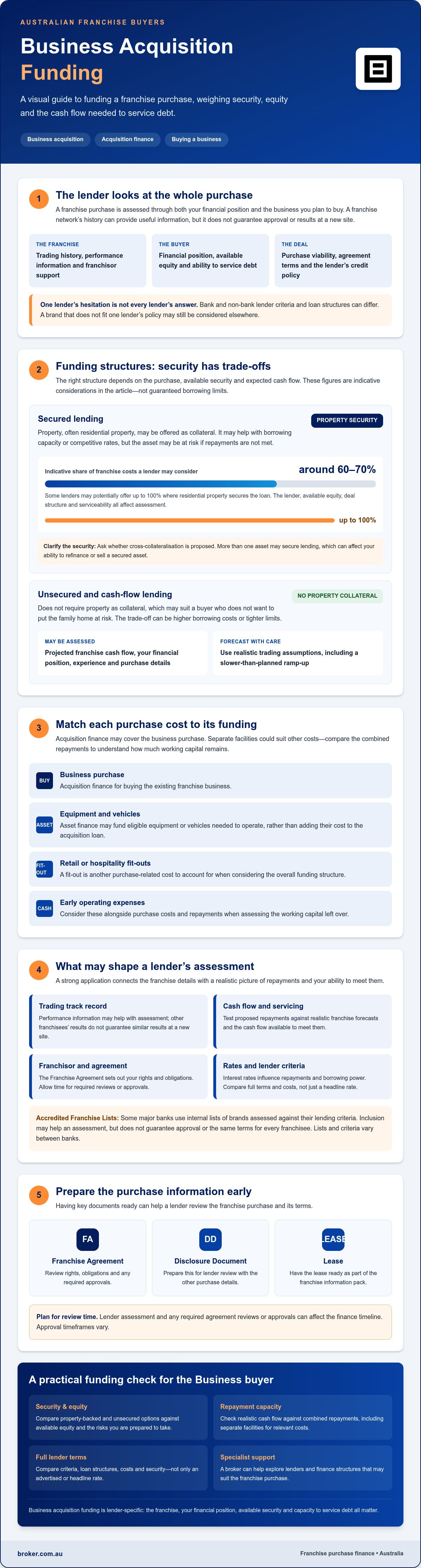
For a buyer purchasing an existing franchise, the right funding structure depends on the purchase, available security and expected cash flow. Acquisition finance may cover the business purchase, while separate facilities could fund equipment, a fit-out or early operating expenses. Match each cost to a suitable facility and calculate the combined repayments so you can see how much working capital will remain.
Secured Loans: Leveraging Property for Lower Rates
A secured business loan uses an asset, often residential property, as collateral. Offering property may help you access competitive rates or increase borrowing capacity, but the asset may be at risk if repayments aren’t met. Ask whether the lender proposes cross-collateralisation, where more than one asset secures the lending. This can affect your ability to refinance or sell a secured asset, so clarify exactly what is being offered as security.
As an indicative guide, lenders may consider funding around 60–70% of franchise costs, with some potentially offering up to 100% where residential property secures the loan. These figures aren’t guaranteed limits. The lender, available equity, deal structure and your capacity to service the debt all influence the assessment.
Unsecured and Cash-Flow Lending
Unsecured options don’t require property as collateral, which may suit a buyer who doesn’t want to put the family home at risk. The trade-off can be higher borrowing costs or tighter limits. Lenders may consider projected franchise cash flow alongside your financial position, experience and purchase details. Build forecasts using realistic trading assumptions, including the possibility of a slower-than-planned ramp-up.
Non-bank lenders may offer alternatives to bank finance, but approval times and pricing vary. Compare the full terms and check proposed repayments against expected cash flow.
Other costs may call for purpose-specific finance:
- Equipment and vehicles: Asset finance may fund eligible equipment or vehicles needed to operate, rather than adding their cost to the acquisition loan.
- Retail or hospitality fit-outs: Fit-out finance may help cover premises preparation. Check that the facility aligns with the lease and opening plans.
- Early operating costs: Working Capital Finance may help manage the initial “burn” period, when expenses arise before revenue stabilises.
For example, buying a business could involve acquisition funding for the purchase, fit-out finance for premises work and working capital for early expenses. Calculate the combined repayments before committing. To explore how these options may fit together, discuss tailored franchise funding options.
What Lenders Actually Look for in a Franchise Application
A franchise application is about more than the brand name. Lenders assess the purchase, your ability to run the operation and whether the proposed business can support repayments. The familiar “Five Cs” offer a useful way to understand that assessment:
- Character: Your credit conduct, experience and approach to managing the franchise.
- Capacity: Whether forecast cash flow and your wider financial position can service the proposed debt.
- Capital: Your deposit and other equity committed to the purchase.
- Collateral: Any assets offered as security, where relevant to the finance structure.
- Conditions: The franchise system, purchase terms, lease and other factors that may affect the business.
The Strength of the Franchise System
Lenders may examine how long the brand has operated in Australia, the stability of its franchise network and what performance information is available. Ask the franchisor for relevant information about the system and existing franchisees, including business closures or transfers where available. Don’t assume the network’s overall results predict the performance of your proposed site.
Some banks use preferred or accredited franchise lists as part of their assessment. A brand’s status can vary between lenders, and being listed doesn’t guarantee approval. If the franchise is newer or unaccredited, a lender may have less established information to assess. Support your application with detailed forecasts, franchise documents, evidence of your equity and a clear explanation of the business model. Lenders may assess the opportunity under different criteria.
The proposed site matters, too. Lenders may consider local trading assumptions alongside the lease term, rent, outgoings, renewal options and other conditions that could affect your ability to operate from the premises. Base your projections on the actual site and lease obligations, not just general franchise forecasts.
Your Personal Profile as a Franchisee
A turnkey system still needs a capable operator. Relevant industry or management experience can help show a lender that you understand the day-to-day demands. If you’re new to the sector, explain how your transferable skills prepare you to manage the business. Lenders may also review your credit history and ask for a personal assets and liabilities statement to understand your commitments and available resources.
A business plan helps explain how the purchase, site, operating assumptions and projected cash flow fit together to support debt repayment. Make sure its assumptions are clear and specific to the franchise you intend to buy.
If you’re researching “funding to buy a franchise australia”, prepare for questions about both the brand and your own finances. An evidence-led application gives the lender a clearer basis for assessment.
Step-by-Step Guide to Organising Your Franchise Finance
A well-organised application can make a complex franchise purchase easier to assess and help keep finance aligned with your proposed settlement. Start early so the lender has time to review the opportunity, your financial position and the documents behind the deal. Use this sequence to organise funding to buy a franchise in Australia.
1. Check Your Borrowing Capacity Before Committing
Before making binding commitments, discuss the purchase price, your available deposit and equity, existing commitments and expected cash flow with a finance professional. This initial assessment can help clarify a realistic borrowing range and identify gaps to address. Separate the franchise fee from the total investment cost, which may include fit-out, equipment, stock and funds for early operating expenses. Confirm the full breakdown with the franchisor.
2. Review the Documents and Prepare Your Financials
Before signing the Franchise Agreement, consider getting independent legal advice so you understand the obligations and terms. Assemble the core documents a lender may need to assess the proposed purchase:
- Franchise Agreement: the proposed terms of your relationship with the franchisor.
- Disclosure Document: information about the franchise offer and system.
- Lease: premises terms, including the rent and lease period, where applicable.
Organise your tax returns and BAS statements for the last two years, along with a current personal assets and liabilities statement. Prepare a business plan and financial forecasts showing how you arrived at expected sales, expenses and repayments. Use assumptions that reflect the specific franchise site and allow for a slower start, rather than relying only on optimistic projections.
3. Submit the Application and Respond to Assessment
Once the documents and finance structure are ready, submit the formal application to the selected lender. The credit team may conduct a “common sense assessment”, considering whether the purchase, your experience, available equity, projected cash flow and proposed repayments fit together. Depending on the lender and transaction, a valuation or other independent review may also be requested.
If the lender issues conditional approval, read every condition carefully. Requirements vary and may include further documents, guarantees or insurance. Ask what each condition means, who needs to complete it and by when. Conditional approval is not the same as final approval.
4. Coordinate Approval and Settlement
Keep your lender, solicitor and franchisor updated on the expected settlement date and outstanding requirements. Your solicitor can help coordinate agreement and settlement documents, while the lender confirms its conditions have been met before funds are released. Keep a clear list of responsibilities and provide updates to help manage outstanding tasks.
For support organising franchise Business Acquisition Funding around your purchase documents and timeline, discuss your franchise finance options.
Why Partnering with a Specialist Broker is Your Best Move
Franchise funding can involve more than finding a lender willing to consider the purchase. The finance structure needs to suit the franchise, your available equity, projected cash flow and settlement timeline. A business loan broker can help bring these details together and explore lenders whose criteria may fit the application.
A broker can help you consider lender options and compare the terms available to you. Lenders may assess the same purchase differently, and there’s no guarantee they will offer the same terms or approve an application. Comparing options can help you look beyond the policy of a single bank and consider what suits your needs as a business buyer.
Access to a National Panel of Lenders
One bank may decline a franchise application because the brand or deal falls outside its appetite, while another lender may assess it differently. Banks and specialist commercial lenders can vary in their policies, assessment processes and appetite for particular transactions. A broker can help you explore which lenders may consider the application, rather than treating one bank’s decision as the final word.
This can be useful when a purchase has several moving parts, such as acquisition funding alongside fit-out or equipment needs. Broker.com.au arranges Business Acquisition Funding and other business finance through lenders. The right options depend on the details of your application.
A Seamless, Tech-Driven Experience
Preparing information for a loan application can feel repetitive, particularly when settlement dates are approaching. Broker.com.au uses proprietary AI technology to facilitate loan applications. This can support the application process, while a broker can help you understand lender requirements and the details needed for the transaction.
You’ll still need to provide accurate financial and franchise information, review the proposed terms and decide whether the repayments suit your plans. Having help to understand what a lender is asking for can make it easier to organise information and respond to requests.
If you’re researching funding to buy a franchise australia, outline the franchise opportunity and your finance needs to Broker.com.au, then explore which Business Acquisition Funding options may suit your situation.
Take the Next Step with Confidence
Funding to buy a franchise australia means matching your chosen brand and financial position with a lender’s requirements. Compare secured and unsecured options carefully, and check that your equity contribution and projected cash flow can support the repayments. Preparing the franchise documents, lease and financial forecasts early can help you manage the application and settlement process.
Broker.com.au is an Australian business loan broker that arranges Business Acquisition Funding and other finance through lenders. Its proprietary AI technology facilitates loan applications, and a broker can help you consider finance options for your purchase.
Ready to explore your options? Discuss your franchise funding goals with Broker.com.au.
Frequently Asked Questions
Can I get funding to buy a franchise with no experience?
A lack of direct industry experience doesn’t automatically rule you out, but lenders may want evidence that you can manage the franchise. Explain how your transferable skills, management background or training prepare you to operate the business. A clear plan, realistic cash-flow forecasts, your equity contribution and information about franchisor support can help a lender assess the application. Requirements vary, so one lender’s decision may not reflect every available option.
How much deposit do I need for a franchise loan in Australia?
Deposit requirements depend on the lender, the franchise purchase and the proposed security. As a general guide, lenders may require 10% to 30% of the purchase price, while banks may commonly look for 20% to 30%. Some may expect more equity or property security. Ask how the deposit is calculated and whether you’ll also need funds for working capital and other acquisition costs.
What is the average interest rate for franchise finance in 2026?
There isn’t a reliable average rate for franchise finance in 2026 provided here. Rates depend on factors such as security, loan structure, lender criteria and your financial position. Don’t treat a general business loan rate as a quote for your franchise purchase. Compare written offers and assess the repayments against the franchise’s cash-flow forecasts.
Can I use my SMSF to buy a franchise?
Don’t assume your Self-Managed Super Fund (SMSF) can borrow to purchase or operate a franchise business. Broker.com.au offers SMSF Loans for investment in commercial or residential property, which is different from finance to acquire an operating franchise. The proposed structure needs careful assessment. Before proceeding, seek advice from appropriately qualified legal, tax and superannuation professionals about whether your intended transaction is permitted and suitable.
How long does it take to get a franchise loan approved?
Approval timeframes vary with the lender, the complexity of the acquisition and how complete your application is, so there’s no guaranteed turnaround. Lenders may need the franchise documents, lease details, financial information, forecasts and evidence of your deposit. Start early, respond promptly to requests and keep your solicitor and franchisor informed about the finance timeline. Digital application processes may help organise an application, but can’t guarantee approval by a particular date.
Can I get a loan to buy an existing franchise in a newer or unaccredited system?
It may be possible, although a newer or unaccredited franchise system can be harder for lenders to assess if there’s limited trading history. Support your Business Acquisition Funding application with information about the franchisor, the existing business’s trading performance, your equity and realistic forecasts. Explain your relevant experience and how the purchase can service its debt. Lender appetite differs, so a decline from one lender isn’t necessarily the final answer.
What happens if the lender term is shorter than my franchise agreement?
A shorter loan term may mean higher repayments over a tighter period, putting more pressure on the acquired franchise’s cash flow. Don’t assume the lender will extend or refinance the loan later. Compare the repayment schedule with your forecasts and consider what happens if trading is slower than expected. Ask the lender about the term and any options at expiry, and have your solicitor review how the finance period fits with the franchise agreement.
Do I need to provide a personal guarantee for a franchise loan?
Possibly, but it depends on the lender, borrower structure, security and acquisition. Read any proposed guarantee carefully to understand who is responsible for the debt, what obligations apply and when they could be called on. Don’t treat a guarantee as a formality, even if the borrowing is through a company. Ask the lender to explain the requirement and seek independent legal advice before signing, especially if personal assets could be exposed.