
The headline rate is only one part of a development loan’s cost. Pricing reflects the project’s risk, while the loan term, funding flexibility and any minimum interest period affect the total interest payable. Understanding these factors is central to assessing the risks of development finance before committing to a facility.
It’s natural to focus on the rate, but a project’s funding cost is also shaped by its timeline and delivery risks. Lower-risk developments are generally priced more competitively than higher-risk ones, and delays can extend the period for which funding is needed.
This guide explains how development finance is priced in Australia, how lenders set limits against project costs and end value, and why defaults, valuations, construction delays and cost overruns matter. It also shows how to assess the funding structure alongside project feasibility, helping you decide whether a loan suits your development.
Key Takeaways
- Plan for an equity contribution and allow for delays in meeting lender criteria, which can affect project timing.
- Review default clauses as well as repayment obligations: covenant breaches and project issues can trigger serious lender enforcement actions.
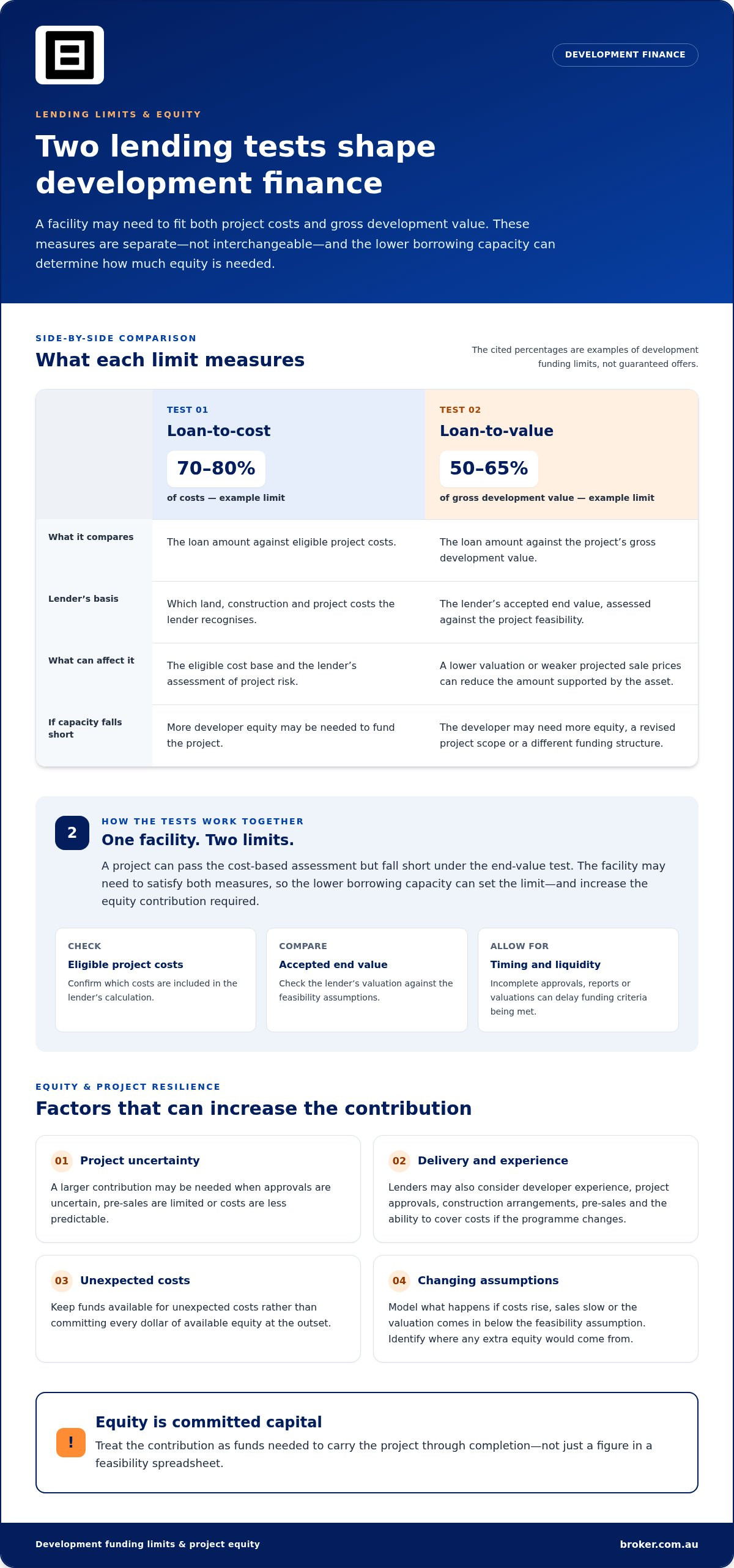
- Compare proposed lending limits with both project costs and gross development value; examples cited include 70-80% of costs and 50-65% of gross development value.
- Model how delays, cost overruns, interest rate movements and slower sales could affect the project, and include a contingency allowance in the budget.
- Understand how staged drawdowns, loan terms and project milestones fit together before committing to a facility.
Table of Contents
- Equity requirements and lending limits
- Events of default and lender enforcement
- Loan-to-value ratios and gross development value
- Construction delays and cost overruns
- What is development finance and how does it work in Australia?
- Broker.com.au: Secured Business Loans
Equity requirements and lending limits
Development lenders generally expect developers to contribute equity alongside borrowed funds. This gives the project a financial buffer and means the lender does not carry the full exposure. The required contribution depends on eligible project costs, valuation, projected end value and the lender’s risk assessment. A larger contribution may be needed if approvals are uncertain, pre-sales are limited or costs are less predictable.
Lending limits are often assessed against both loan-to-cost and loan-to-value measures. One example of a development funding limit is 70-80% of costs; another is 50-65% of gross development value. These are separate tests, not interchangeable measures. A facility may need to fit within both, so the lower borrowing capacity can determine how much equity the developer must provide.
A project might, for example, pass the cost-based assessment but fall short under the end-value test. A lower valuation or weaker projected sale prices can reduce the amount supported by the asset. The developer may then need more equity, a revised project scope or a different funding structure. Equity is committed capital, not merely a figure in a feasibility spreadsheet.
- Check the cost base. Confirm which land, construction and project costs the lender recognises when calculating the loan-to-cost limit.
- Understand the valuation basis. Compare the lender’s accepted end value with the assumptions used in the project feasibility.
- Allow for timing. Meeting bank funding criteria can cause costly delays, especially if approvals, reports or valuations are incomplete.
- Protect a cash buffer. Keep funds available for unexpected costs rather than committing every dollar of available equity at the outset.
Lenders assess more than the headline lending percentage. They may consider the developer’s experience, project approvals, construction arrangements, pre-sales and ability to cover costs if the program changes. Development finance providers can have different funding objectives, so their assessments may not match a commercial lender’s approach. The practical question is whether the structure leaves enough equity and liquidity to carry the project through completion.
Before committing, model the facility against project costs and expected value. Test what happens if costs rise, sales slow or the valuation comes in below the feasibility assumption. If the project then needs extra equity, identify its source and consider how it affects other commitments. This makes the risks of development finance clearer before lending limits shape the project’s viability.
Events of default and lender enforcement
An event of default can arise from missed obligations or project problems, even when scheduled repayments are up to date. In Australia, the Personal Property Securities Act applies to some security over personal property, where registration and priority can matter if several secured creditors are involved. Lender and broker licensing requirements depend on the activities and facility involved.
Events that trigger default
An event of default is a circumstance defined in the contract that gives lenders rights beyond collecting scheduled repayments. Australian development finance agreements may include covenant breaches, insolvency, misrepresentation, failure to maintain security, cost overruns, material adverse changes or delays in reaching practical completion. A borrower may therefore meet repayment dates but breach another obligation. The wording matters because it determines what action the lender can take.
Security and guarantees
Security gives a lender rights over specified assets if the borrower defaults, while a guarantee can give the lender recourse to a guarantor. Development finance may be secured against development land, with additional security or guarantees included in the facility structure. For personal property, registration and priority can matter if several secured creditors are involved. These arrangements determine who can enforce against an asset and in what order.
Personal liability for borrowers
Personal liability depends on the guarantee and security documents signed by borrowers and guarantors. A personal guarantee may expose a guarantor’s assets to a claim, and recourse to related entities may also be relevant. Before signing, guarantors should understand the extent of their obligations and obtain independent legal advice. Company borrowing can create personal exposure if the documents extend beyond the project company.
After an event of default, a lender may cancel undrawn finance, accelerate the debt, appoint a receiver or enforce security, including by selling development land. This can interrupt construction and remove control of the project from the developer. Identifying a covenant issue early gives the parties a chance to address it before enforcement rights are exercised, although the agreement governs the available responses.
Projects using senior debt, mezzanine funding, shareholder loans or other secured finance need a clear priority structure. Documents should specify payment order, enforcement control, limits on payments to junior creditors and any standstill arrangements. Without clarity, creditors may have competing interests if a site encounters trouble. A defined process can help mitigate conflict and preserve a workable response to project problems.
Review the default triggers, notice requirements, cure periods, guarantee scope and enforcement powers as one connected set of terms. Also consider whether a change in project costs or timing could breach a covenant despite payments remaining current. The margin for error can narrow quickly if construction milestones slip. A careful review of the development finance structure helps connect the facility’s obligations with the project’s delivery plan.
Loan-to-value ratios and gross development value
Before borrowing, compare the facility’s valuation basis, equity conditions and project assumptions with a detailed feasibility. Stress-test end values and sales, then assess how lower valuations could affect borrowing capacity and project progress.
Gross development value
Gross development value (GDV) is the projected total value of a completed development, based on its expected sale or realisation. Lenders use GDV to assess the loan against the property’s anticipated end value, rather than only its current state. If the valuation is below the developer’s forecast, the lender may support less funding, leaving a capital shortfall.
Australian development finance facilities may include covenants covering loan-to-value and loan-to-cost ratios, equity contributions, pre-sales, additional borrowing, reporting, cost to complete, distributions and project changes. These terms link the valuation to ongoing obligations. A material change in costs or expected proceeds can affect the facility’s ratios and trigger a need for more equity or lender consent.
Loan limits also depend on how a lender weighs project risk. Lower-risk developments are generally priced more competitively, while lenders seeking to grow their loan books may accept higher-risk properties or unsustainable loan-to-value ratios. A larger facility is not automatically safer: the developer still needs enough capital to complete the work and repay the debt.
Presales and valuation changes
Pre-sales are agreements to sell units before a development is complete. Lenders may use them to assess demand and support projected values. The risk is that buyer demand, sale prices or contract conditions can change before settlement. A later valuation below the feasibility assumption can reduce lending headroom, while falling property prices may leave sale proceeds insufficient to repay the facility.
Pre-sale requirements vary with the funding structure. Review how the facility treats cancelled contracts, acceptable buyers and required sale proceeds. Compare the lender’s valuation assumptions with comparable sales and the intended buyer market. For example, if a project relies on premium pricing but comparable properties sell for less, both GDV and the repayment plan may need reassessment.
Due diligence should connect the valuation to the project’s real delivery and sales conditions:
- Reconcile assumptions: compare the valuer’s end value with feasibility forecasts and comparable sales.
- Test demand: assess whether proposed unit types and prices align with likely buyers.
- Read facility covenants: identify pre-sale thresholds, reporting duties and limits on project changes.
- Stress-test outcomes: model softer prices, slower sales and reduced funding against remaining costs.
Traditional property lending and development finance may assess different stages of a project’s value. In Australia, development lending focuses on the site, construction plan and expected end value. Ground the assessment in project-specific assumptions, including the intended buyer market, construction scope and expected sales. This helps you judge whether the proposed facility fits the project, rather than relying on a broad valuation alone.
Construction delays and cost overruns
A project delay can extend borrowing and disrupt construction cash flow. Model delays, cost overruns, interest rate movements and slower sales together, as each can put pressure on project viability.
Construction delays
A construction delay is a setback in approvals, building work or project milestones against the agreed program. It matters because later completion can extend the funding period and postpone expected sales. Zoning or regulatory delays can stall work, while material shortages and labour issues can disrupt contractor schedules. Each delay can affect the next stage of delivery.
Pay close attention to drawdown conditions before signing. Development funding is commonly released in stages as construction progresses, with milestones checked through inspections or reporting. If a required milestone depends on work that cannot reasonably be completed on schedule, funds may not arrive when contractor payments fall due. This can constrain cash flow even if the overall project remains viable.
Compare the facility’s drawdown tests with the building program, approval sequence and payment schedule. If a drawdown depends on a completed stage, for example, map the evidence needed to demonstrate completion and the time required to provide it. Include planning approvals, inspections and infrastructure connections in the program. An unrealistic timeframe can turn a manageable delay into a funding problem.
Cost overruns
A cost overrun occurs when actual project spending exceeds the budget or feasibility estimate. It matters because additional costs can reduce the funds available to finish construction and may breach a facility’s cost-to-complete requirements. An unexpected materials shortage, labour issue or design change can require extra capital before the next funding stage is released.
Project budgets should include a contingency of 10-15% for unexpected expenses. Treat that allowance as a buffer, not as money already available for planned upgrades. The appropriate contingency depends on the estimate’s detail, construction scope and exposure to changing conditions. A cost plan with clear assumptions helps identify which changes could use the reserve.
Use regular cost-to-complete reviews to link construction progress with funding needs. Compare committed contracts, paid invoices and remaining work against the current budget. If a variation increases costs, update the forecast before the next drawdown request. This gives the project team a clearer view of whether the remaining finance and available equity can cover completion.
- Test the program: model approval slippage, contractor delays and slower sales against the project timeline.
- Review cash flow: align expected drawdowns with contractor payment dates and milestone evidence.
- Track variations: record scope changes and their effect on the cost-to-complete forecast.
- Protect contingency: monitor the remaining allowance as risks emerge during construction.
Poor construction cash flow management can delay contractor payments and project milestones. A practical funding plan links the agreement’s drawdown conditions to achievable delivery dates, while the budget accounts for delays and cost changes. Review these assumptions as work progresses, particularly if an approval, material supply or labour issue changes the construction sequence.
What is development finance and how does it work in Australia?
Development finance funds property projects such as land acquisition, construction and associated soft costs. In Australia, funding is commonly assessed against project feasibility and released in stages as construction progresses.
The assessment looks beyond the borrower’s general finances. Lenders review development costs, projected end values, timelines, contingency allowances and how the project performs under changing conditions. For example, a project forecast should show how expected sales and remaining construction costs relate to the funding requested.
Pricing reflects the project’s risk profile and facility structure. Lower-risk projects are generally priced more competitively than higher-risk ones. Lenders consider approvals, build arrangements, forecast costs, expected values and the delivery timetable. The loan term also matters: if completion or sales take longer than planned, interest may apply for longer. Some non-bank lenders offer fixed rates for an agreed term, providing more certainty during that period.
Before drawdown, Australian development lenders commonly require:
- Planning and other relevant project approvals.
- An executed building contract and quantity-surveyor reports.
- Insurance, pre-sales and evidence of the developer’s equity contribution.
- Valuations, title documents, corporate approvals and evidence of security.
These documents help the lender assess whether the project is ready to proceed and whether the security aligns with the proposed facility. Missing approvals or incomplete feasibility projections can hold up an application. A quantity-surveyor report, for example, supports the review of construction costs and progress, while title documents help establish which property is being financed.
Once the facility is available, funding is commonly drawn in stages rather than paid out as a lump sum. Drawdowns are linked to construction milestones and checked through inspections or reporting. This connects advances to verified progress, so project cash flow must align with the release conditions. A payment due before a milestone is certified can create a timing gap.
Assess the facility as a whole: compare its pricing and term with the construction program, drawdown conditions and expected sales timeline. A shorter term may create pressure if practical completion or settlements are delayed. A longer term can change the total financing cost. Include land acquisition, construction and soft costs in the feasibility, then test how revisions affect completion funding and repayment.
For a project with complex stages or timing, discuss your development funding structure in light of its feasibility, drawdown milestones and delivery schedule.
Broker.com.au: Secured Business Loans
Broker.com.au arranges Development Finance for developers whose project costs, valuation and drawdown schedule need to align. Its Secured Business Loans may also suit businesses seeking funding against eligible assets, with the structure shaped around the financing requirement.
Bring together the project feasibility, current cost-to-complete forecast, valuation and key facility terms. This provides a clearer basis for discussing how equity, security and funding stages relate to the development. If construction timing creates a working cash-flow gap, Working Capital Finance may also be relevant alongside the project facility.
Understanding the risks of development finance starts with seeing how the loan terms interact with real project delivery. For a conversation about your funding needs, contact Broker.com.au.
Set your project up for a considered funding decision
A development’s funding strategy should support the project from commitment through completion, while leaving room to respond if conditions change. Before moving ahead, bring your feasibility, funding plan and key obligations together. This helps you assess whether the proposed structure fits the project’s delivery needs and your capacity to manage the risks of development finance.
Broker.com.au can discuss funding needs across different business situations, including through Secured Business Loans, Unsecured Business Loans and Business Acquisition Funding. For property development, focus the conversation on the project’s financing requirements and the role security may play in the proposed structure.
Discuss development finance with Broker.com.au and take the next step with a clearer view of your project’s funding needs.
Frequently Asked Questions
How Is Property Development Finance Priced?
Pricing reflects project risk, the funding structure and how long the loan remains outstanding. A lender assesses feasibility, approvals, forecast values, costs and delivery arrangements when setting terms. Compare the whole facility, not just its interest rate: fees, any minimum interest period, drawdown conditions and extension terms can affect the total cost. A delayed settlement, for instance, may leave the debt in place longer than planned.
What are the main risks of development finance for borrowers and lenders?
The risks of development finance include a project falling short of its forecasts, leaving the borrower short of funds or unable to repay. Lenders face exposure if security values fall or construction cannot be completed as planned. Borrowers should also understand that a loan covenant can be breached even when repayments are on time. Accurate reporting and a realistic view of project progress can help both sides identify problems earlier.
How do development finance costs compare with bank construction loans and private lending in Australia?
Bank construction loans may be priced more competitively when project risks are well managed, while private funding may suit projects with different requirements or risk profiles. Compare more than the rate: consider the loan term, approval criteria, drawdown flexibility, minimum interest period and extension terms. A project needing faster access or involving a complex structure should weigh those features against total borrowing costs and delivery needs.
What happens if a property development is delayed or goes over budget?
A delay or cost overrun can leave the developer needing extra funds, more time or lender approval for a revised plan. If the facility term expires, the project may need an extension, and the lender may reassess its terms. If an overrun breaches a loan covenant or affects completion, default provisions may apply. Keep the cost-to-complete forecast up to date and flag changes early, so funding needs are clear before cash flow tightens.