
The right retail shop fit out loan is not necessarily the one offering the largest amount. It’s the one that funds the work while leaving your business room to trade. A new store or refurbishment can involve design, construction and furnishings, while repayments may start before the shop has built a steady customer base. Before choosing a funding option, work out which costs need funding, how much you can contribute and whether repayments will put pressure on cash flow.
This guide explains practical retail fit-out finance options and how to plan funding around your project and repayment capacity. Lenders may consider your business’s cash flow, profitability, existing debt and credit history. A clear project budget and realistic financial forecasts can help explain the request. We’ll also cover deposits or equity contributions, the importance of retaining working capital, and how Business Acquisition Funding differs from fit-out finance if you’re buying an existing store as well as refurbishing it.
Key Takeaways
- A retail shop fit out loan may help fund costs such as design, construction and furnishings, depending on the project and lender criteria.
- Compare fit-out finance with using cash reserves, secured or unsecured finance, and equipment finance for eligible equipment.
- Prepare project details, business financial information and realistic cash-flow forecasts to help lenders assess your application.
- Set your fit-out priorities, timing and available contribution before seeking finance, then check repayments against your business’s capacity.
- Broker.com.au arranges fit-out finance for retail premises and can help present your project to lenders with your funding needs in focus.
Table of Contents
- What does a retail shop fit out loan cover?
- How can retail shop fit-out finance be structured?
- What will lenders assess for a retail shop fit out loan?
- How should you plan a retail fit-out loan around your business?
- How can Broker.com.au help arrange retail shop fit-out finance?
What does a retail shop fit out loan cover?
A retail shop fit out loan is business finance used to establish or refurbish retail premises. It may cover project components such as design, construction and furnishings, depending on the scope and lender criteria. If you’re also buying the shop business, separate the fit-out budget from the purchase funding at the planning stage. This gives lenders a clearer picture of each funding need and helps you assess the total commitment.
Which parts of a retail fit-out may need funding?
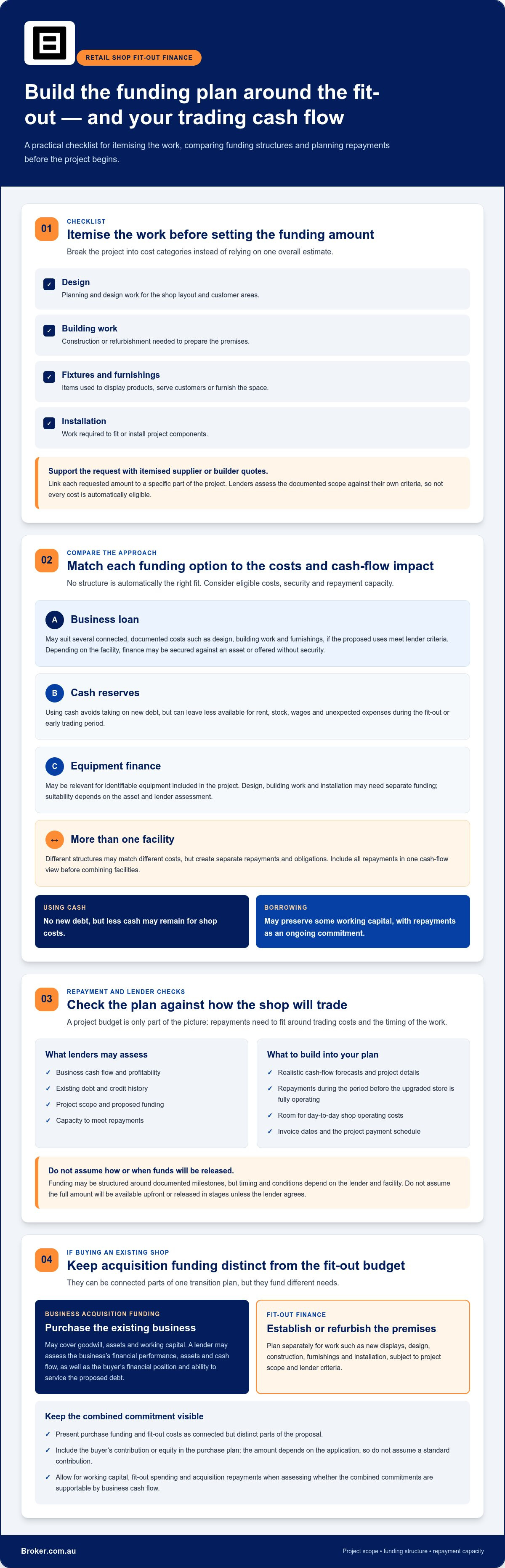
Break the project into cost categories rather than relying on one overall estimate. Depending on the work, these may include:
- Design: planning and design work for the shop layout and customer areas.
- Building work: construction or refurbishment needed to prepare the premises.
- Fixtures and furnishings: items used to display products, serve customers or furnish the space.
- Installation: work required to fit or install project components.
Use itemised supplier or builder quotes to link each requested amount to a specific part of the project. This gives a clearer basis for the funding request than an unsupported total estimate. Lenders assess the documented scope against their own criteria, so don’t assume every cost will be eligible.
Fit-out finance versus business acquisition finance
For a Business buyer, Business Acquisition Funding can cover the purchase of an existing business, including goodwill, assets and working capital. Fit-out finance is for establishing or refurbishing retail premises. They are separate funding needs, even when they’re part of the same transition plan. For example, someone taking over a shop may need acquisition funding to purchase the business, then fit-out finance for new displays and refurbishment work.
Present the purchase funding and fit-out as connected but distinct parts of the proposal. For an acquisition, a lender may assess information about the business, its financial performance, assets and cash flow, as well as the buyer’s financial position and ability to service the proposed debt. The buyer’s contribution or equity depends on the application, so include it in the purchase plan without assuming a standard amount. Allow for working capital and fit-out spending as well as acquisition repayments, then consider whether the combined commitments are supportable by the business’s cash flow. If movable fittings or equipment are part of the project, a chattel mortgage is one structure to understand, as it uses movable assets as security.
How can retail shop fit-out finance be structured?
The suitable structure depends on the project and how repayments fit alongside the shop’s trading costs. A retail shop fit out loan may fund several documented project components through a business loan. Other retailers may use available cash, secured finance, unsecured finance or a combination of options. None is automatically the right fit. Lender criteria, eligible costs, security and the business’s ability to make repayments all matter.
Using cash reserves avoids taking on new debt, but it can leave less available for rent, stock, wages and unexpected expenses during the fit-out or early trading period. Borrowing may preserve some working capital, but repayments become an ongoing commitment. Consider the cash-flow effect of each approach, not just whether it covers the project. Retail businesses also have day-to-day operating demands, so leave room in your forecast for the costs of running the shop. Find general information about the Australian retail store sector here.
When might a business loan suit a shop fit-out?
A business loan may suit a project with several connected costs, such as design, building work and furnishings, if the proposed uses meet the lender’s criteria. Depending on the facility, finance may be secured against an asset or offered without security. Terms and eligible costs vary by application. Map expected repayments against realistic trading cash flow, including the period before the upgraded store is fully operating. Approval isn’t guaranteed, so base the plan on what the business can reasonably afford.
If invoices fall due at different stages, include the payment schedule in your funding plan. Funding may be structured around documented project milestones, but the timing and conditions depend on the lender and facility. Don’t assume the full amount will be available upfront or released in stages unless the lender agrees to that arrangement.
When could equipment finance be relevant?
Equipment finance may be suitable for identifiable equipment included in the project. It differs from broader fit-out funding: equipment finance relates to eligible assets, while design, building work and installation may need to be funded separately. Suitability depends on the asset and lender assessment.
Using more than one facility can match different costs to different funding structures, but it also means managing separate repayments and obligations. Before combining a business loan with equipment finance, include all repayments in one cash-flow view. Broker.com.au arranges fit-out finance around the project and business circumstances. Read about retail fit-out finance options when planning funding for your shop.
What will lenders assess for a retail shop fit out loan?
Lenders assess the applicant, the proposed funding, the project scope and the capacity to meet repayments. For a retail shop fit out loan, they may consider the business’s financial position, cash flow, profitability, existing debt and credit history, alongside the planned work. If your finance request also involves buying an existing shop business, explain the purchase and fit-out as separate funding needs.
For a business purchase, Business Acquisition Funding may be assessed using information about the business being acquired, the buyer’s financial position and the proposed purchase structure. A lender may expect the Business buyer to contribute equity, but the amount and form depend on the application. Plan for this contribution alongside the fit-out requirement, working capital and other purchase-related commitments. Approval depends on the lender’s assessment of the complete application, not on the project alone.
How do servicing and cash flow affect an application?
Servicing means being able to meet proposed repayments from available cash flow while keeping up with existing obligations. For an acquisition, lenders may consider whether the business’s financial performance and the buyer’s circumstances support the proposed debt. For a fit-out, forecasts should allow for disruption during the work, opening plans and the time it may take for trading to settle. Projected sales can inform a forecast, but they don’t guarantee approval.
Assess the combined commitments if you’re purchasing and refurbishing a shop. Include acquisition repayments, fit-out finance, existing debts and operating costs in the same cash-flow view. This helps show whether the proposed contribution and repayments leave enough liquidity for the business to operate.
What information can help support the application?
Lender requirements vary, so prepare information that explains both the transaction and repayment plan. Depending on the application, useful material may include:
- Fit-out details: a defined scope, project timing and supplier or builder quotes.
- Purchase information: details of the business being acquired and how the purchase funding is allocated.
- Financial information: relevant business and buyer financial details, including existing debt commitments.
- Cash-flow forecasts: realistic projections that account for repayments, operating expenses and the transition period.
- Contribution and premises details: the proposed equity contribution and lease or premises information that helps explain the operating plan.
Keep the purchase, fit-out and working-capital figures distinct, then show how they combine in the overall funding and servicing plan. This helps the lender assess the full proposal against its criteria.
How should you plan a retail fit-out loan around your business?
A clear plan helps you apply for finance for a defined project rather than borrowing against a rough estimate. Before seeking a retail shop fit out loan, map the work, timing and contribution against the store’s expected cash needs. Use this sequence to prepare:
- Define the fit-out scope. Describe the retail space, planned work and purpose of each upgrade. Separate essential items from optional improvements.
- Set out the stages and timing. Note when design, building work, equipment or installation is expected, and when supplier or builder payments fall due.
- Build a supported funding breakdown. Match each requested component to a quote or clear cost breakdown. Identify what you’ll fund from business cash or another contribution.
- Review your operating position. Include current commitments and expected operating expenses, and retain enough liquidity for the shop to keep trading through the project.
- Stress-test the proposed facility. Compare repayments and payment timing with conservative cash-flow forecasts before deciding whether the structure is manageable.
Prepare a finance-ready fit-out plan
Make the project easy to understand. Explain what will change in the shop, why the work is needed and how the stages relate to your opening or trading plans. Link each funding request to its supporting quote so the proposed facility has a clear purpose. If you plan to contribute funds, show how that contribution fits your cash position without exposing day-to-day operating needs.
Stress-test repayments before committing
Use cautious assumptions rather than optimistic sales expectations. Test the proposed repayments against expected cash flow while allowing for existing debt, regular operating expenses and any disruption during the fit-out. Consider whether cash will be available when invoices fall due and after the work is complete. Proposed terms, repayment details and conditions depend on the application, so review the facility against the business’s full obligations before proceeding.
A well-prepared plan won’t guarantee approval, but it can clarify the request and help align the funding structure with the shop’s circumstances. Read about fit-out finance with Broker.com.au and how funding can be structured around your project and business needs.
How can Broker.com.au help arrange retail shop fit-out finance?
A fit-out project needs funding that reflects both the planned work and the business expected to repay it. Broker.com.au arranges fit-out finance for commercial premises, including retail spaces, and facilitates applications between businesses and lenders. Rather than treating a retail shop fit out loan as a standalone figure, the application process considers the project scope, funding purpose, business position and repayment capacity together.
What to discuss when arranging fit-out finance
Set out the premises, planned work, timing and itemised funding needs. Supplier or builder quotes can show how the requested finance relates to specific parts of the fit-out. It’s also useful to explain the business’s current financial position, existing commitments and how it expects to manage repayments while retaining enough cash for operating expenses.
The proposed structure should suit the project’s payment schedule and the business’s cash-flow pattern. If project invoices fall due in stages, include that timing in the funding discussion alongside your opening or trading plans. Lender requirements and available structures differ, so clear information helps present the application in context. Broker.com.au uses proprietary AI technology to facilitate quick and accurate loan applications.
When the project also involves buying a business
Buying an existing shop can create two related but distinct funding needs. Business Acquisition Funding may address the purchase of the business, including goodwill, assets and working capital. Fit-out finance relates to establishing or refurbishing the premises. A Business buyer taking over a shop that needs new displays or building work can show the purchase funding and post-purchase fit-out as separate parts of the overall plan.
Keeping the purposes clear helps show how each part of the funding request fits the transaction and business plan. It also makes it easier to review the combined commitments: acquisition repayments, fit-out repayments and ongoing operating costs all need to be considered against the business’s ability to service debt. Broker.com.au can structure the fit-out application around the project and business circumstances, while considering how it relates to the wider funding need.
If you’re planning a shop refurbishment or changes after a purchase, start with a clear view of the project and your repayment capacity. Discuss fit-out finance with Broker.com.au.
Plan your fit-out funding with confidence
A well-planned retail shop fit out loan starts with a defined project scope and a realistic view of repayment capacity. Itemised costs, project timing and a considered contribution can help explain your funding needs. Cash-flow forecasts let you assess whether repayments leave room for everyday operating expenses.
The suitable structure depends on the work and your business circumstances. Broker.com.au arranges finance for commercial fit-outs, including retail premises, and its business finance options include secured and unsecured loans, equipment finance and acquisition funding. If you’re buying a shop as well as refurbishing it, keep Business Acquisition Funding for the purchase distinct from fit-out finance, then assess the combined commitments against the business’s cash flow.
With a clear plan, you can compare funding options against your project and trading needs. Explore retail fit-out finance with Broker.com.au to discuss funding for your shop.
Frequently Asked Questions
What can a retail shop fit out loan be used for?
A retail shop fit out loan may help fund eligible costs involved in establishing or refurbishing retail premises. Depending on the project and lender’s assessment, this could include design, construction, furnishings, fixtures or installation. Prepare a clear scope and itemised supplier or builder breakdown to show what the requested finance will support. The lender’s criteria and your application determine which costs can be included.
Can I finance a new retail store fit-out as well as a refurbishment?
Yes, fit-out finance can be arranged for a new retail space or a refurbishment of existing premises. Broker.com.au arranges finance for commercial fit-outs, including retail premises. Explain the work, its purpose and timing in your project plan, and link costs to quotes or a clear breakdown. Lender criteria and your business’s financial position will influence the finance structure and eligible project costs.
Do I need a deposit or equity contribution for a shop fit-out loan?
A deposit or equity contribution may form part of an application, but there isn’t one universal contribution requirement for every shop fit-out loan. Expectations depend on the lender, proposed facility, project and business circumstances. Be ready to explain what funds you’ll contribute and how that affects available cash for rent, wages, stock and other operating needs. The lender assesses the contribution alongside the wider application.
How do lenders assess a retail shop fit-out loan application?
Lenders assess the project, the applicant and the business’s ability to meet repayments. They may consider financial information, profitability, cash flow, existing debt commitments and credit history, along with the fit-out scope and funding request. Realistic forecasts should account for disruption during the works and the store’s trading plans. Approval and available terms depend on the lender’s criteria and assessment of the complete application.
Can I get fit-out finance when buying an existing retail business?
Yes, fit-out finance may be considered for refurbishment after a business purchase, subject to the lender’s assessment. Keep the purposes clear: Business Acquisition Funding can address purchase needs such as goodwill, assets and working capital, while fit-out finance relates to work on the premises. As a Business buyer, include the combined repayments and operating cash needs in your servicing plan rather than assessing each facility in isolation.
How can I manage fit-out loan repayments alongside retail cash flow?
Build repayments into a conservative cash-flow forecast before committing to a facility. Include existing debt, regular operating expenses, fit-out payment timing and any period when works may affect trade. Check that the business can meet repayments while retaining liquidity for day-to-day needs. Avoid relying on optimistic sales assumptions, particularly for a new store or one reopening after refurbishment. Facility terms and repayment details depend on the lender and application.
Can equipment finance be used for part of a retail shop fit-out?
Equipment finance may suit eligible, identifiable equipment included in a retail project, subject to lender assessment. It differs from broader fit-out finance, which may relate to components such as design, construction and furnishings. If you’re considering more than one facility, review all repayments and obligations together against the business’s cash flow. Broker.com.au arranges equipment finance as well as finance for commercial fit-outs.