
A board can assess a loan request more clearly when it links the amount sought to a defined business need, a credible repayment plan and measurable outcomes. Knowing how to present a loan proposal to the board means making a concise case around those points, supported by current financial information, relevant documents and a frank assessment of risk.
It is natural to focus on the opportunity the funding could unlock, especially when buying a business or planning an acquisition. But directors also need to understand how the borrowing fits the company’s goals, what will service the debt and what could affect the plan.
This guide covers how to build the financial case, present historical performance and forecasts, organise supporting material, and show how the funding could translate into business results. It also explains how to address loan structure, cash flow, existing debt and potential challenges, so the board can make an informed decision.
Key Takeaways
- Define the amount, purpose and proposed structure of the loan, then show how repayments will be supported by business cash flow.
- Use historical performance and realistic forecasts to explain the business’s capacity to service debt and the assumptions behind future results.
- Organise current financial records and relevant agreements so the board can assess the request without gaps or conflicting figures.
- Link each use of funds to measurable outcomes, such as improved efficiency, stronger cash flow or progress towards a business goal.
- For a business acquisition, make the purchase rationale, equity contribution, existing debts and expected impact on cash flow clear in the proposal.
Table of Contents
- How to Write a Winning Business Loan Proposal?
- Building a financial case from historical performance
- Preparing supporting financial and legal documents
- Connecting use of funds to measurable business outcomes
- What should a board loan proposal include in Australia?
- Broker.com.au
How to Write a Winning Business Loan Proposal?
Build the proposal around the business acquisition funding required, a realistic repayment plan and evidence that the acquired business can meet its obligations. Link the purchase to the buyer’s goals before preparing the lender application, including the buyer’s equity contribution and post-settlement cash flow.
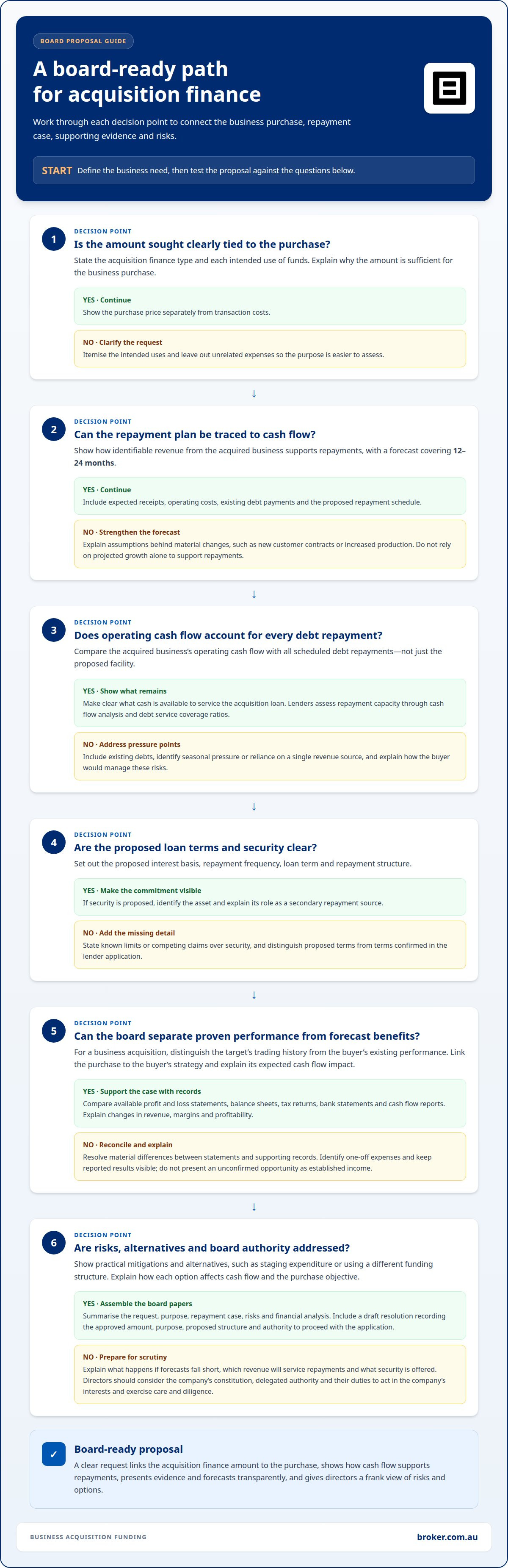
- Define the Acquisition Finance Amount and PurposeState the amount sought, the acquisition finance type and each intended use of funds. For example, list the purchase price separately from transaction costs rather than presenting one unexplained total. Match the request to the business purchase and explain why the amount is sufficient. Leave out unrelated expenses, which can make the purpose harder to assess.
- Build the Repayment Plan and Cash Flow ForecastShow how the business buyer will repay the loan from the acquired business’s identifiable revenue, then connect those sources to a cash flow forecast covering 12-24 months. Include expected receipts, operating costs, existing debt payments and the proposed repayment schedule. Explain assumptions behind material changes, such as new customer contracts or increased production. Don’t rely on projected growth alone to support repayments.
- Demonstrate Debt Repayment CapacityCompare the acquired business’s operating cash flow with all scheduled debt repayments to show what remains available to service the acquisition loan. Include existing debts, not just the proposed facility. Lenders assess repayment capacity through cash flow analysis and debt service coverage ratios. Highlight seasonal pressure or reliance on a single revenue source, then explain how the buyer would manage these risks.
- Set Out Interest, Repayments and SecurityDescribe the proposed interest basis, repayment frequency, loan term and repayment structure so the buyer can assess the full commitment. If security is proposed, identify the asset and explain its role as a secondary repayment source. State any known limits or competing claims over that security. Distinguish proposed terms from terms confirmed in the lender application.
- Prepare purchase papers that summarise the request, purpose, repayment case, risks and supporting financial analysis. Include a draft resolution recording the approved amount, purpose, proposed structure and authority to proceed with the application. In Australia, directors should consider the company’s constitution, delegated authority and their duties to act in the company’s interests and exercise care and diligence when deciding.
- Present acquisition risks alongside practical mitigations and alternatives, such as staging expenditure or using a different funding structure. Explain how each option affects cash flow and the purchase objective. Directors may ask why the amount is needed, what happens if forecasts fall short, which revenue will service repayments and what security is offered. Prepare concise answers grounded in the proposal’s figures and assumptions.
Building a financial case from historical performance
Use historical records to show how the business earns revenue, manages costs and generates cash flow. Then link those results to the financing need and proposed monitoring.
- Establish the Background and Financing NeedExplain the business’s operating history, industry, products or services, ownership and reason for seeking finance. Focus on developments that help the board understand the request, such as a change in customer demand or pressure on operating capacity. Tie each point to an observable business result. Avoid a lengthy company history, including only context that explains the financing decision.For a business acquisition, distinguish the target’s trading history from the buyer’s existing performance. Show how the purchase fits the buyer’s strategy and how the combined operation could affect cash flow. Separate established results from expected benefits, so the board can see which parts of the case rely on historical evidence.
- Review Historical Financial Statements and RecordsCompare profit and loss statements, balance sheets, tax returns, bank statements and cash flow reports for the periods available. Explain changes in revenue, margins and profitability rather than presenting figures without context. If a period includes a one-off expense, identify it and show its effect separately. Keep the reported result visible so adjustments do not obscure the business’s actual performance.Use the balance sheet to discuss liquidity, leverage and changing obligations. Reconcile material differences between statements and supporting records before presenting the case. For example, explain whether a revenue increase came from recurring customer activity or a single contract. This gives the board a clearer basis for assessing credit strength and cash flow reliability.
- Develop Financial ProjectionsBuild projections from the historical baseline, then state the assumptions behind expected sales, costs and cash flow. Show how the financing could affect those figures, separating existing operations from forecast improvements. If revenue depends on new customers, production capacity or planned efficiencies, identify the driver and its expected contribution. Do not treat an unconfirmed opportunity as established income.Include a downside view alongside the expected case. Explain which assumptions would change first if sales softened or costs rose, and how that would affect repayment capacity. Keep forecasts consistent with the financing need. Directors should be able to trace each projected result to an operating assumption, not unexplained growth.
- Set Covenants and Financial MonitoringPropose practical monitoring measures, such as regular financial reporting and agreed covenants. Define each covenant in plain language, explain what information will track it and identify who will review the results. For example, link a cash flow measure to an early discussion if trading weakens. Clear reporting helps directors monitor performance against the assumptions behind approval.Set out how the board will respond to a variance, including when management will provide an updated forecast. Tailor reporting to the risks identified in the proposal rather than relying on a generic checklist. Comparing actual results with projections can reveal whether revenue, margins or operating costs are moving away from plan and support timely decisions.
Preparing supporting financial and legal documents
- Assemble the financial records that support each claim in the proposal. Business loan applications commonly include profit and loss statements, balance sheets, tax returns, bank statements and cash flow reports. Applicants typically provide 3 to 6 months of personal and business bank statements. Label each document with its reporting period, so directors can find the evidence behind each income or revenue figure.For an acquisition, include records that explain the target business’s trading performance and proposed purchase. A purchase agreement, customer contracts, commercial lease and financial projections can provide relevant context. Keep the target’s documents separate from the borrower’s records. This helps directors distinguish figures for the existing business from those for the proposed transaction.
- Reconcile key figures across all documents before circulating the board papers. Compare reported revenue in the profit and loss statements with the figures used in forecasts and the loan application. If bank deposits differ from recorded income, explain why, for example, because of timing differences or non-trading receipts. Do not silently adjust source records; show the original figure and explain any adjustment separately.Check that reporting periods, entity names and dates align. For example, a forecast should start from the same latest trading period shown in the financial statements. Confirm that the borrower named in the application is the entity seeking finance. Consistency helps directors follow the case and prevents unexplained mismatches from weakening the credit assessment.
- Group supporting documents by purpose, then use an index to link each item to a claim in the proposal. Business licences can support details about operations; lease documents can clarify premises commitments; and customer contracts can support revenue assumptions. Include a business plan or financial projections when they explain the funding need. Avoid unrelated attachments that make key documents harder to find.When buying a business, include the purchase agreement and relevant lease or customer arrangements alongside the acquisition rationale. Identify conditions or obligations in those documents that could affect timing, operating costs or cash flow. Distinguish agreed transaction terms from assumptions used in forecasts. This gives the board a clearer view of the proposed purchase.
- Organise the loan agreement and security documents as carefully as the financial records. In Australia, a secured loan must have its terms in writing. Present the written terms alongside the proposal, and make sure the borrower, loan purpose, repayment obligations and security description are clear. If documents describe different terms, explain which version is proposed and resolve inconsistencies before seeking approval.Finish by checking for missing attachments, spelling errors, unclear explanations and inaccurate figures. Confirm that every referenced agreement or forecast is included and that directors can trace each material claim to its supporting record. A clean, indexed pack gives the board a practical basis for assessing the borrower’s income, commitments and proposed financing.
Connecting use of funds to measurable business outcomes
Translate each proposed expense into an outcome the board can monitor. A clear business profile and concise executive summary help directors connect the funding to company priorities.
- Start with an executive summary identifying the borrower, funding purpose and decision sought. For a business acquisition, name the target, explain its strategic fit and distinguish the purchase from later investment in operations. Make clear how acquisition finance would support the transaction. Present the central case upfront, then direct readers to the supporting analysis. Avoid burying the decision in unrelated company history.Add a short business profile covering the company’s location, industry, operating history, products or services and ownership. Explain who will oversee the funds and which existing capabilities support the plan. For example, when acquiring a business in a related sector, describe how current customer relationships or expertise could support integration.
- Link every proposed use of funds to a measurable outcome and a way to track it. Equipment funding might support greater production capacity; fit-out funding could enable a new service area. Establish a baseline from current records, then state the intended change and review period. Choose indicators that reflect the objective, such as units produced, processing time, customer retention or operating costs.Make the cause-and-effect link explicit. If purchasing a business is expected to improve efficiency, explain which process changes and how management will measure the result. A restaurant proposal, for instance, could track average seating cycles per evening, with the forecast moving from 2.4 to 3.1. Separate forecast outcomes from results already achieved.
- Keep the loan proposal separate from the business plan. The proposal is a targeted request for debt financing, while the business plan sets out a broader company roadmap. Use the proposal to explain the amount, structure, use of funds, repayment case and expected outcomes. Draw only on relevant business-plan details so the board can focus on the lending decision rather than reviewing the entire strategy.Boards need a clear link between requested funding and the result being measured. Include a brief outcome table with the expenditure, baseline, target, accountable owner and reporting method. Avoid unsupported claims such as “growth will improve” without naming an indicator. If a mortgage or other facility funds premises, distinguish that purpose from working capital and operating goals.
- Show how management will monitor results after approval. Assign an accountable role to each outcome, identify the data source and set a regular board reporting point. For example, the finance lead could report actual costs against the approved budget, while an operations manager tracks capacity or service delivery. Prefer measures the company already records over new metrics without a reliable baseline.Close the case by explaining what happens if outcomes differ from forecasts. A variance may prompt updated projections, changes to spending or a review of the operating plan. Link the response to cash flow and the original funding purpose. This gives directors a practical way to assess whether acquisition finance remains aligned with company objectives.
What should a board loan proposal include in Australia?
Arrange the papers so directors can assess the request, repayment capacity and risks. For a business acquisition, show how the buyer’s contribution and proposed borrowing fit the transaction and the business’s cash flow.
- Open with a decision summary naming the borrower, amount sought, purpose, proposed structure and repayment sources. For an acquisition, identify the target business and the purchase components being funded, such as goodwill, assets or transition working capital. State the decision required and outline the lender relationship and loan officer, where relevant. This keeps the board’s discussion focused on the transaction.
- Explain the buyer’s contribution to the purchase. Identify the available equity or deposit, its source and how much will remain for operating cash after completion. Do not present the contribution as a standalone figure: show how it changes the borrowing required and whether it leaves the business with adequate liquidity. If the contribution depends on another transaction, state that condition clearly.
- Describe the purchase structure and funding gap. Separate the amounts allocated to business assets, goodwill and transition needs, then explain which parts the proposed loan will cover and which the buyer will fund. Identify purchase conditions that could change the amount or timing. This helps directors assess whether the request matches the transaction rather than an assumed headline purchase price.
- Show how the acquired business is expected to service the debt after settlement. Distinguish the target’s current trading cash flow from the buyer’s forecast combined position. Account for existing obligations and the effect of integration on cash available for repayments. Explain which customer revenue or operating activity supports the servicing case, and identify assumptions that depend on retaining customers or key arrangements.
- Summarise the buyer’s financial capacity and commitment. Include existing debts, available equity and any other investment in the transaction. Explain how these affect the proposed loan and the business’s ability to absorb changes in trading. Keep the buyer’s contribution distinct from the acquired business’s operating cash flow, so directors can assess each source separately.
- Include a collateral schedule if security is proposed. Describe each asset, its value and valuation source, any existing claim over it, and its connection to the acquisition. Explain the lender’s position alongside the buyer’s equity contribution. This gives directors a clearer picture of the security supporting the transaction and the assets that may remain available to the business.
- Set out risks and mitigations specific to the purchase. Consider changes in customer demand, reliance on key staff or suppliers, and a gap between settlement and stable trading. Explain how available working capital, transition planning or staged expenditure could address these pressures. Identify risks that could reduce cash flow available for servicing.
- Finish with a recommendation and proposed resolution. State the amount, acquisition purpose, proposed structure and conditions directors are asked to approve. Attach the acquisition analysis and supporting schedules, using clear headings and summaries. Before recording a decision, the board should be able to see how the buyer’s contribution, loan request and projected servicing fit together.
Broker.com.au
Business Acquisition Funding can provide a lending pathway for a business purchase once a board-approved plan is in place. Secured Business Loans, Unsecured Business Loans and Working Capital Finance may suit other funding needs. The right option depends on the purpose of the funds, available security and the business’s capacity to service repayments. A clear funding structure can align the board’s decision with the next steps in your application.
For support considering finance options for your proposal, contact Broker.com.au.
Move from approval to a suitable funding pathway
Once directors have considered the proposal, the next step is to assess how to fund the business acquisition. The buyer’s contribution, loan servicing and the business’s cash flow must work together to support the purchase and repayments. A practical way to present a loan proposal to the board is to treat approval as the starting point for arranging suitable acquisition finance, not the end of the process.
Broker.com.au arranges Business Acquisition Funding, including Secured Business Loans and Unsecured Business Loans. The right structure depends on the transaction, the borrower’s circumstances and whether the business’s cash flow can support the proposed repayments.
Take the next step at your own pace. Contact Broker.com.au about your loan to discuss funding your business purchase, including the buyer’s contribution and repayment needs. A considered next move can help turn a board decision into confident action.
Frequently Asked Questions
What Documents Do I Need to Attach?
Attach documents that support the request and let directors trace important claims to source records. For an acquisition, include transaction documents that clarify what is being purchased and any conditions affecting completion. Use a contents page with clear file names and reporting periods, and mark documents that support specific assumptions. If a record has changed since the board pack was prepared, identify the updated version to avoid conflicting information.
What are the 5 Cs of a credit presentation?
The 5 Cs are character, capacity, capital, collateral and conditions. Character relates to the borrower’s credit history and reliability; capacity considers ability to repay. Capital describes the borrower’s financial contribution, collateral is security available to support the loan, and conditions include the purpose of funding and broader circumstances affecting repayment. Use each lens to organise the credit case, then explain which factors strengthen or weaken this specific request.
What financial information and forecasts should a loan proposal include?
Include historical results and forecasts that show how the proposed borrowing could affect income, the balance sheet and cash flow. State the assumptions behind sales, costs, margins and any new revenue, and show how the timing of funds affects the forecast. For an acquisition, separate the target’s historical results from the buyer’s projected combined position. A sensitivity view can highlight which assumptions have the greatest effect on repayment capacity.
What loan terms should directors compare, including interest rates, fees and security?
Directors should compare the complete written terms, not just the interest rate. Review whether interest is fixed or variable, how repayments are calculated, the repayment schedule, and any fees or conditions stated in each offer. Assess the security required, the assets affected and the circumstances for releasing that security. A side-by-side comparison can reveal trade-offs between repayment flexibility, total borrowing costs and the impact on assets the business may need later.
What Australian laws and director duties apply when approving a company loan?
Directors should check the company’s constitution and delegated authority, and act in the company’s interests while exercising care and diligence when deciding whether to approve the loan.